Standing Water Under a Mobile Home Millsboro
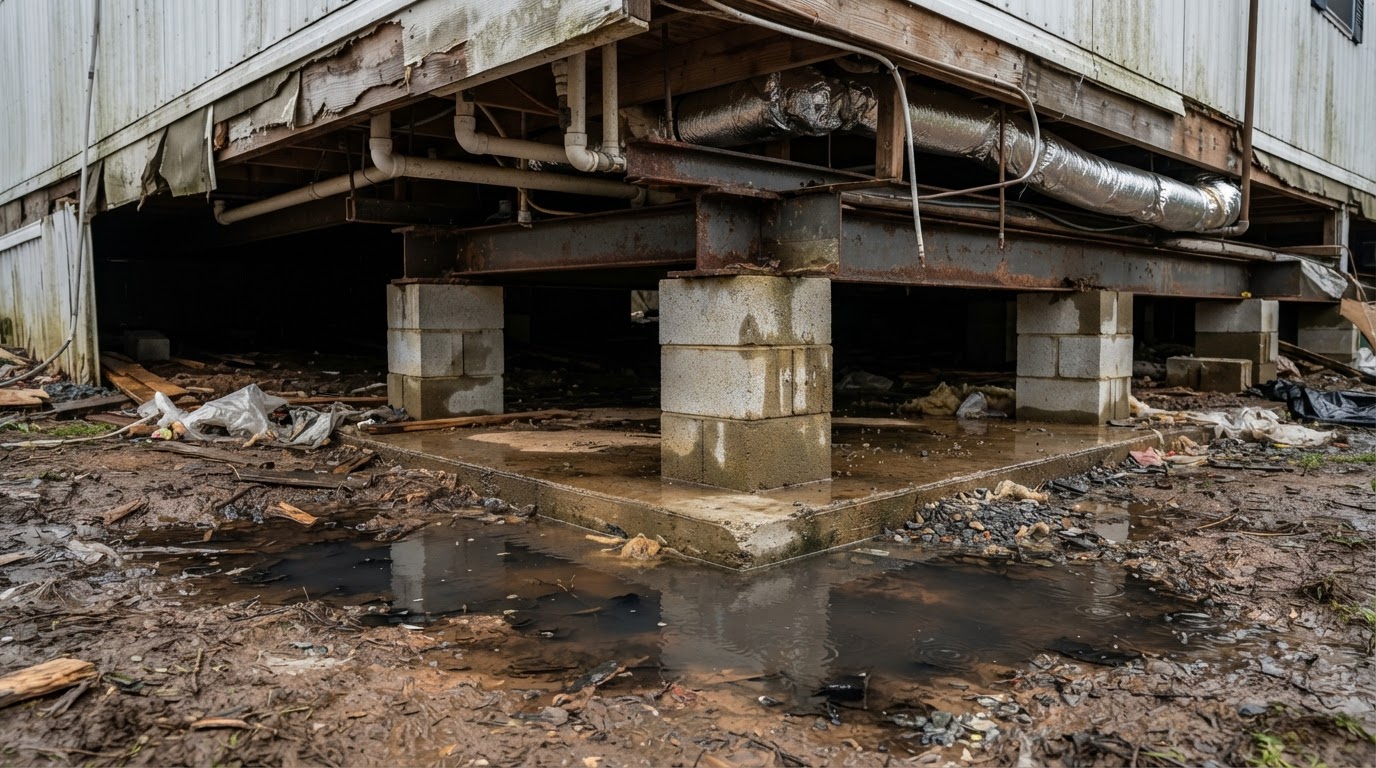
Standing water under a mobile home does not automatically mean the foundation has failed, but persistent water beneath a manufactured home can contribute to soil softening, pad or pier movement, corrosion of metal components, and changing support conditions over time. Homeowners in Millsboro and throughout Sussex County, DE often notice standing water after rain, between storms, or in a low area of the crawlspace, and the important question is where the water is coming from and whether the support system beneath the home has already moved. Standing water is a different observation than erosion or washout — water remaining in place is not the same as bearing material being removed. Millsboro Mobile Home Leveling evaluates the physical foundation and support effects of moisture beneath the home to determine whether leveling, pier repair, pad repair, reblocking, anchoring, or stabilization is appropriate — and whether separate drainage or site work by another professional is also needed.
Request Mobile Home Foundation Service
Serving Millsboro and all surrounding Sussex County communities.
What Standing Water Beneath a Manufactured Home Can Indicate
Standing water means water has accumulated and remained beneath or around the home rather than draining away. The foundation concern is not the water alone — it is the effect that persistent moisture can have on the piers, pads, blocks, shims, and anchoring components beneath the home.
Poor Surface Drainage
Water that cannot move away from the crawlspace can collect in the lowest area beneath the home and remain there long after a storm passes.
Roof Runoff
Runoff from the roof that discharges near the home can pool beneath it, especially where gutters or downspout extensions are missing or short.
Low Areas Around the Home
A natural low point in the grade surrounding the home can direct and hold water in the crawlspace rather than carrying it away.
Plumbing or Appliance Leakage
A plumbing or appliance leak beneath the home can create standing water independent of rainfall. Plumbing leaks should be diagnosed by an appropriate professional.
HVAC Condensate
Condensate from a nearby HVAC or utility component can drip or drain into the crawlspace and accumulate over time.
Stormwater or Floodwater
Stormwater accumulation or floodwater can introduce water beneath the home; whether that becomes a foundation problem depends on how the supports respond afterward.
Water Entering From Surrounding Grade
Water moving from the surrounding lot or neighboring property can flow beneath the home and settle in the crawlspace.
Millsboro Mobile Home Leveling focuses on the foundation, leveling, support, and anchoring effects of moisture beneath the home. The source of the water — plumbing, drainage, or runoff — may require a separate plumbing or drainage professional to diagnose.
Standing water does not always cause these effects, and one wet crawlspace inspection is not by itself proof of foundation damage. The level condition and the support relationship determine whether standing water has become a foundation concern.
How Water Can Affect Piers, Pads, Blocks & Anchoring
Persistent moisture does not damage every support the same way. Whether standing water becomes a foundation concern depends on how long it remains, which components it reaches, and whether the bearing beneath the supports has already changed.
Soil Softening Beneath Supports
Bearing material that stays wet can soften over time, which can reduce the support beneath a pad or pier even before the home feels noticeably unlevel.
Pad or Footing Settlement
A pad resting on softened bearing can begin to settle or tilt, letting the pier above it drop or lean.
Pier or Block Movement
Saturated material around a pier or block stack can shift, which can change the contact between the support and the frame.
Erosion Around Bearing Areas
Standing water that slowly moves can carry bearing material away from a pad or pier, creating the conditions for washout.
Shim Contact Changes
Support movement from softening or settling can loosen shims between the pier and the frame, opening a gap that affects level.
Anchoring Component Exposure
Ground anchors and tie-down hardware sitting in standing water can corrode faster, and saturated soil can reduce anchor holding capacity.
Corrosion on Metal Components
Steel I-beam frames, straps, and anchoring hardware exposed to persistent moisture can develop rust and corrosion that may warrant evaluation.
Standing Water vs Foundation Erosion or Washout
Standing water and erosion are related but distinct observations. Distinguishing them matters because they point toward different next steps.
Standing water
Water remains pooled beneath or around the home rather than draining away. The concern is moisture's effect on supports and metal components over time.
Erosion or washout
Soil or bearing material has actually moved or been removed from around a support. The concern is lost bearing and the settlement that can follow.
Both can exist together
A home can have standing water without obvious erosion, or erosion during fast-moving water without water remaining afterward.
When Standing Water Should Lead to a Foundation Evaluation
Standing water deserves a foundation and leveling evaluation when the moisture appears to be affecting the support system beneath the home, not merely because water is present.
- ▸A new floor slope developed after standing water appeared
- ▸The home sits noticeably lower on one side
- ▸A pier or block has shifted since the water accumulated
- ▸A pad edge has become exposed or the soil has separated from it
- ▸Visible soil loss or a channel has formed near a support
- ▸Rocking or shaking has appeared or increased
- ▸Shims have loosened or fallen out of contact
- ▸Anchoring components are exposed, rusted, or shifted
Millsboro Mobile Home Leveling evaluates the physical foundation, leveling, and anchoring effects of moisture beneath the home. Full drainage installation, regrading, or plumbing leak repair is performed by the appropriate professional where required — the company does not claim to provide comprehensive drainage remediation unless separately verified.
Related Services
- Mobile Home Foundation & Leveling InspectionThe evaluation that reads level, supports, and anchoring together.
- Mobile Home Foundation RepairWhen moisture has damaged a support component.
- Mobile Home Pier Repair & ReplacementWhen a pier has moved after water accumulated beneath it.
- Mobile Home Concrete Footing & Pad RepairWhen a pad has settled or tilted from softened bearing.
- Manufactured Home Foundation StabilizationWhen recurring movement from moisture needs to be stopped.
- Mobile Home Anchor & Tie-Down InspectionWhen anchoring components may have corroded or shifted.
Standing Water Under a Mobile Home FAQs
Is standing water normal under a mobile home?
Some moisture beneath a manufactured home can occur after heavy rain, but persistent standing water that remains between storms is generally not desirable. The foundation concern is whether the moisture is affecting the piers, pads, blocks, shims, or anchoring beneath the home.
Can standing water make a mobile home unlevel?
Yes, it can. Persistent water can soften bearing material, allow a pad to settle, or contribute to pier or block movement, any of which can change the home's level over time.
Does standing water mean I need re-leveling?
Not automatically. Re-leveling may be appropriate if the home has become unlevel, but the underlying cause — softening, pad movement, erosion, or anchor corrosion — should be evaluated first so the correction matches the actual condition.
Can water cause a pier to sink?
Yes. Water that softens the bearing material beneath a pad or pier can let the support settle, which can drop the frame above it.
Can water affect concrete pads?
Yes. Saturated bearing material beneath a pad can allow the pad to settle, tilt, or crack, and the pier resting on it can follow it downward.
What is the difference between standing water and washout?
Standing water is water that remains pooled beneath or around the home. Washout is soil or bearing material that has actually been moved or removed. A home can have standing water without obvious erosion, and erosion can occur during fast-moving water without water remaining afterward.
Can tie-down components be affected by standing water?
Yes. Ground anchors and tie-down hardware that sit in standing water can corrode, and saturated soil can reduce the holding capacity of an anchoring system.
Should I inspect the foundation after heavy rain?
Where standing water has appeared, a foundation and leveling evaluation can help determine whether the moisture has already affected the supports. Homeowners should not crawl beneath an unstable or saturated crawlspace to inspect loaded supports themselves.
Does Millsboro Mobile Home Leveling provide drainage work?
Millsboro Mobile Home Leveling focuses on foundation, leveling, support, and anchoring services. Where comprehensive drainage installation, regrading, or plumbing leak repair is required, a separate drainage or plumbing professional may be needed in addition to foundation work.
Concerned About Water Around Your Mobile Home Foundation?
If standing water has accumulated beneath your manufactured home, contact Millsboro Mobile Home Leveling at 302-449-7221 to schedule a foundation, support, and level evaluation in Millsboro or the surrounding Sussex County area.
Request Mobile Home Foundation Service
Serving Millsboro and all surrounding Sussex County communities.