Mobile Home Park & Community Leveling & Foundation Services Millsboro
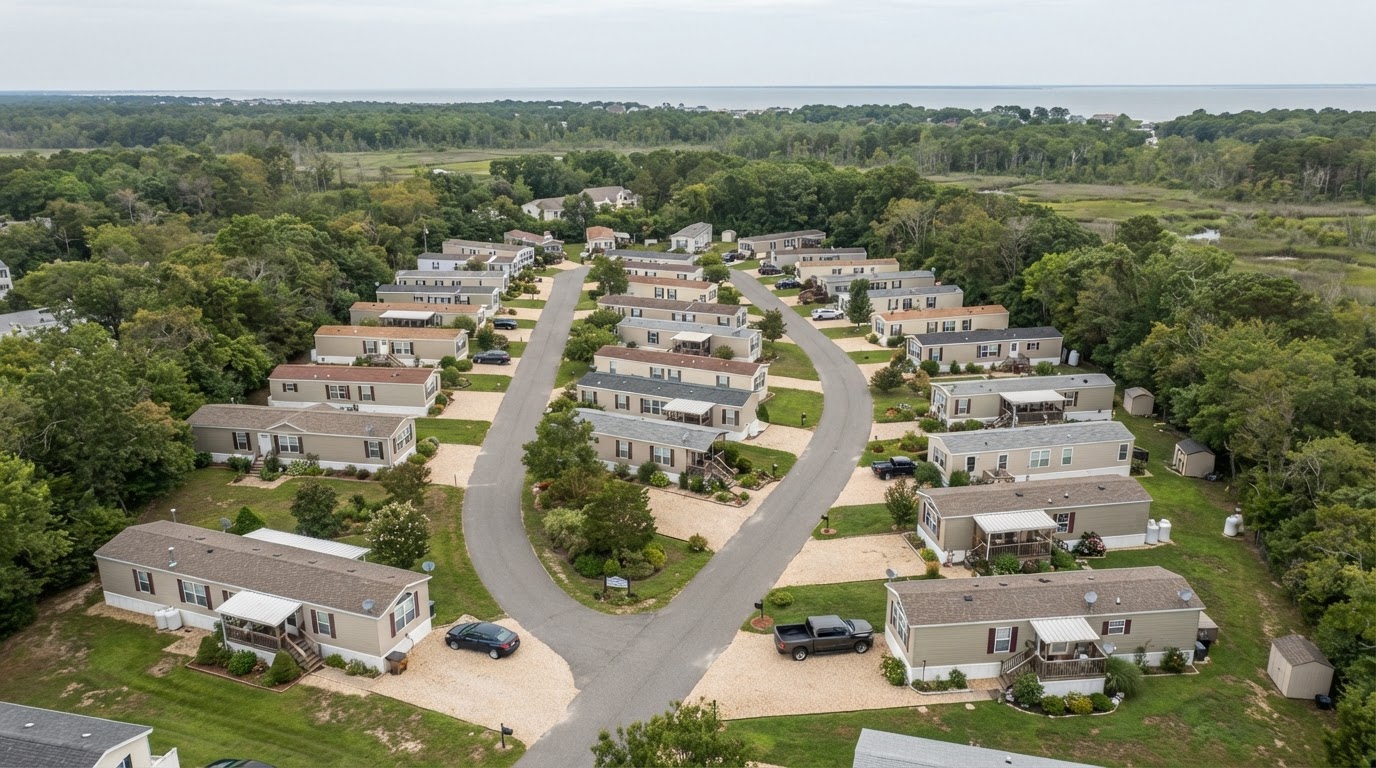
Mobile home parks and manufactured home communities can require foundation and leveling service across multiple homes rather than one isolated property. Millsboro Mobile Home Leveling can evaluate individual homes, recurring support problems, and broader community repair priorities around Millsboro and surrounding Delaware service areas. Community-scale work is not a single large repair applied to every lot at once; it is a series of individual evaluations organized so an operator can understand which homes need attention, which can wait, and which support concerns are repeating across the property.
Request Mobile Home Foundation Service
Serving Millsboro and all surrounding Sussex County communities.
Foundation Services for Mobile Home Parks & Manufactured Home Communities Near Millsboro
A mobile home park or community does not mean every home has the same foundation condition. One lot may sit level on stable supports while a neighboring unit has a settled pier, a third has aging tie-downs, and a fourth has a recurring slope that returns after each leveling. Each home still needs property-specific evaluation, but organizing those evaluations as a coordinated project helps a community operator see the full picture rather than treating every report as a separate surprise.
Community-Owned & Park-Owned Homes
Homes owned and maintained by the community or park itself, where the operator is also the party responsible for the support system and can authorize evaluation or repair directly.
Resident-Owned Homes
Homes owned by individual residents inside a community, where service coordination may involve both the resident's reported concern and the operator's interest in understanding broader community conditions.
Single-Wide, Double-Wide & Multi-Section Units
A single community often contains several home types. Each configuration carries different leveling and support considerations, and a mixed inventory benefits from evaluation rather than assumption.
Older Support Systems & Replaced Homes
Communities frequently include older support systems alongside homes that have been replaced or reset on new pads. Prior work history affects how each unit behaves and what correction is appropriate.
Vacant & Turnover Units
A vacant home preparing for a new resident is a useful moment to inspect visible foundation and level condition before occupancy, rather than after a complaint surfaces.
Occupied Units
Occupied homes can be evaluated where safe access is available, with service coordinated around the resident where applicable.
Mobile Home Park Leveling, Foundation Repair & Anchoring Services
Community-scale foundation service draws on the same leveling, support, reblocking, stabilization, and anchoring work the site provides for individual homeowners, organized around the reality that several homes may need attention in the same period. The services below are grouped by the type of correction each represents; not every category applies to every lot, and the point of organizing them this way is to make clear which homes may need which scope.
Mobile Home Leveling & Re-Leveling
Individual-home elevation correction for units that have shifted out of their intended plane, as well as recurring re-leveling for homes that have been leveled before and moved again. Single-wide and double-wide homes behave differently: a single-wide is one continuous chassis, while a double-wide adds the alignment relationship along the central marriage line. The relevant service pages describe each in detail.
Pier, Block, Pad & Support Repair
Leaning supports, settled piers, damaged block stacks, and pad or footing concerns change how the frame bears above them. Where a single support has failed, an isolated repair may be enough; where several supports are involved, a broader correction may be appropriate.
Reblocking & Stabilization
When multiple supports are shifted or a support arrangement is inconsistent, reblocking corrects the broader block and pier layout rather than adjusting a single point. Stabilization addresses recurring movement where a home continues to settle after leveling.
Anchoring & Tie-Down Systems
Tie-down straps, ground anchors, and frame connections resist lateral and uplift movement from wind and are separate from the vertical support system. Inspection identifies visible corrosion, loose or missing components, and anchor condition; repair or replacement restores the connection where deterioration is found.
Planning Foundation Work Across Multiple Manufactured Homes
Community-scale projects tend to involve several inspection requests, several independent repair scopes, and the question of which homes to address first. A useful approach is to identify the homes with visible movement, separate occupied from vacant units where it helps scheduling, and recognize that similar symptoms across several lots can still have different underlying causes. This is planning of the work itself, not a commercial account-management program or a project-management software package.
Identify homes with visible movement first
A home that is visibly out of level, has a shifted pier, or shows a new slope is a reasonable place to start before the inventory is addressed by routine preventive checks.
Separate occupied and vacant units where it helps
Vacant turnover units can often be scheduled with fewer access constraints, while occupied homes require coordination around the resident. Distinguishing the two keeps scheduling realistic.
Distinguish isolated from repeated support problems
A single failed pier on one lot is a different situation from the same slope returning on the same home after prior leveling, or the same support condition appearing on adjacent lots. Recurring movement may point toward a stabilization conversation rather than another simple re-level.
Track homes with prior leveling or repair history
Knowing which homes have been leveled or repaired before, and when, helps interpret new reports and avoid repeating a correction that did not hold.
Coordinate access and scheduling
Where work spans multiple lots, access for each evaluation or repair is arranged around occupancy, weather, and the operator's own community workflow.
| Condition | Typical Next Step |
|---|---|
| Home visibly out of level | Level / foundation evaluation |
| Leaning or shifted pier | Pier / support evaluation |
| Several supports affected | Reblocking / foundation evaluation |
| Recurring movement after prior leveling | Stabilization / root-cause evaluation |
| Rusted or missing tie-down components | Anchoring inspection |
| Water or erosion around supports | Foundation / site-condition evaluation |
| Vacant home before occupancy or sale | Foundation / leveling inspection |
This table is a planning aid for organizing service requests, not engineering guidance. Each condition still requires its own evaluation before any correction is made.
Common Foundation & Leveling Problems in Manufactured Home Communities
Problems community operators may encounter include the same symptoms homeowners report for a single home, but seen across a property they can add up to a recurring maintenance pattern. None of these symptoms is a diagnosis on its own; each is a reason to evaluate the home beneath it.
Uneven or sloping floors that appear across more than one unit
A home sinking or settling on one side
Pier settlement or leaning block stacks
Loose, crushed, or missing shims
Reblocking needs where the support arrangement is inconsistent
Marriage-line alignment issues on double-wide and multi-section homes
Anchoring deterioration, visible strap corrosion, or missing ground anchors
Ground-anchor displacement or failed anchor components
Drainage, washout, or erosion symptoms around support areas
No claim is made that these conditions are common specifically in any one Millsboro community; they are the conditions that can appear in manufactured-home communities generally and that an operator may want evaluated.
Community Foundation Inspection & Service Process
Community work follows the same evaluation-first approach used for a single home, organized so each lot is read on its own terms rather than grouped by assumption.
Identify the home or group of homes
Determine which lots require evaluation, drawing on operator observations, resident reports, and turnover scheduling.
Document the reported concerns
Record what was noticed, when it began, and any known previous leveling or repair history for the affected homes.
Evaluate each home's level and visible support
Check the frame elevation and inspect the accessible piers, blocks, pads, shims, and support points beneath each home.
Identify the appropriate service type
Determine whether leveling, repair, reblocking, anchoring, or stabilization is appropriate for each home, rather than applying one scope across the lot.
Separate unrelated issues into individual scopes
Keep distinct problems as distinct repair scopes so the work and its cost stay tied to the home that needs it.
Prioritize work by observed condition
Address homes with visible movement or failed components before routine preventive adjustments.
Complete approved service
Carry out the corrections authorized for each home.
Re-check corrected support relationships
Verify that corrected areas bear consistently before finishing, where appropriate.
This is a conceptual service description. Specific jack placement, lifting heights, pier construction, and anchor installation details are not provided here because incorrect work beneath a manufactured home can damage the frame, the floor system, or the supports themselves.
Related Manufactured Home Community Foundation Services
The other pages in this commercial silo narrow into specific audiences. Property managers and park-owned homes, multi-home or portfolio owners, dealers needing setup correction, investors evaluating or preparing a home for resale, and community-wide preventive inspections each address a distinct use case while drawing on the same core leveling, reblocking, stabilization, and anchoring work.
Mobile Home Park & Community Foundation Service FAQs
Can multiple homes in a mobile home park be evaluated during the same service project?
Multiple homes can be discussed and organized as one overall service request, but each home's condition and the work it requires must still be evaluated individually. A coordinated project is a series of individual evaluations, not a single blanket correction applied to every lot.
Do all homes in a manufactured home community need the same foundation repair?
No. A community can contain homes on stable supports alongside homes with settled piers, aging tie-downs, or recurring slope. Even where several homes show similar symptoms, the underlying cause can differ, so the appropriate repair is determined per home.
Can you level single-wide and double-wide homes in the same community?
Both can be serviced, but the configurations differ. A single-wide is one continuous chassis, while a double-wide joins two chassis along a marriage line, which adds alignment considerations. The scope for each home follows its actual configuration.
Can recurring foundation problems be handled differently from a simple re-level?
Yes. A home that returns to slope after leveling may have an underlying support or site condition that a simple re-level does not address. Recurring movement is a reason to evaluate stabilization or root cause rather than repeat the same adjustment.
Do tie-down and anchor problems require a separate inspection from leveling?
Anchoring and tie-down systems are separate from the vertical supports that hold the home up, so they are evaluated as their own system. The same forces that move supports can also affect strap tension and anchor position, which is why both can be checked when a home has shifted.
Can vacant park-owned homes be inspected before a new resident moves in?
A vacant home preparing for occupancy is a useful moment to inspect visible foundation and level condition before a new resident arrives. This is a visible-condition inspection of the support system, not a certification of code compliance.
Do you provide engineering certifications?
Millsboro Mobile Home Leveling focuses on foundation, leveling, support, and anchoring services. Engineering or lender certifications may require an appropriately licensed professional depending on the purpose and jurisdiction.
Do you offer bulk or volume pricing?
Project pricing depends on the number of homes, their individual conditions, and the required scope. Request service to discuss the properties involved.
Do you manage the mobile home park or act as landlord?
No. Millsboro Mobile Home Leveling provides structural foundation, leveling, support, and anchoring services only. It does not manage parks, handle tenancy, collect rent, or provide legal or landlord services.
Discuss Mobile Home Park & Community Foundation Service
Contact Millsboro Mobile Home Leveling at 302-449-7221 to discuss foundation, leveling, reblocking, or anchoring service across a manufactured-home community near Millsboro or the surrounding Sussex County area.
Request Mobile Home Foundation Service
Serving Millsboro and all surrounding Sussex County communities.