Mobile Home Concrete Footing & Pad Repair Millsboro
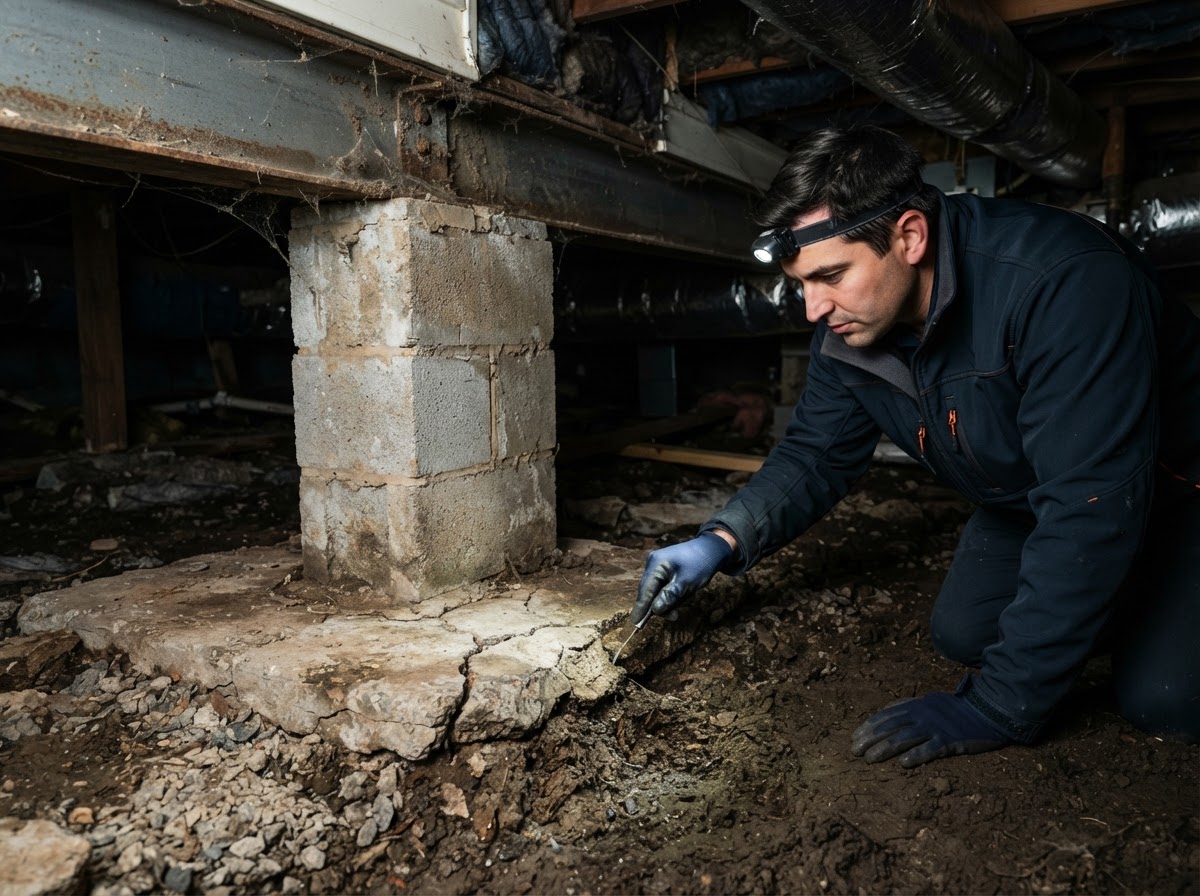
Piers beneath manufactured and mobile homes rely on a stable bearing surface below them. A concrete pad or footing spreads and supports the load the pier transfers down, so when that pad cracks, settles, shifts, deteriorates, or loses proper bearing, the support above it can move as well. Mobile home concrete footing and pad repair addresses that base condition rather than only adjusting the height on top of the pier. Warning signs include a pier that appears to be sinking, a concrete pad that is visibly cracked, a pad that has shifted, a block pier leaning because its base moved, one area that repeatedly becomes unlevel, a pier sitting lower than surrounding supports, erosion or loss of bearing around a support area, or new shim gaps appearing above the affected pier. Millsboro Mobile Home Leveling performs this work for homeowners near Millsboro and throughout Sussex County, DE. Not every concrete crack requires replacement; an inspection determines whether the bearing surface still does its job or needs repair.
Request Mobile Home Foundation Service
Serving Millsboro and all surrounding Sussex County communities.
Mobile Home Concrete Pad Repair Near Millsboro
A concrete pad or footing provides a bearing surface beneath a pier or support so the structural load can be transferred into the supporting ground. The system works in a sequence: the steel frame and I-beam carry the home's load, the pier transfers that load downward, the concrete pad or footing spreads or supports the load below the pier, and shims provide final contact where appropriate. If the base below the pier changes elevation or condition, the pier above it can also shift, tilt, or drop — which is why pad repair targets the bearing surface rather than the height on top.
Cracked Concrete Pads
A crack in a concrete pad can range from a minor surface check to a break that splits the bearing surface and changes how it supports the pier. Severity, location, and whether the crack is still moving all matter, which is why cracks are evaluated in context rather than treated as automatic replacement.
Settled Pads
A pad that has dropped downward lowers the pier resting on it, which can show up as slope or a dip in the floor above. Downward movement of the base is often the real cause when a single support keeps settling after the top is re-shimmed.
Shifted Pads
A pad that has moved laterally changes where the pier above it sits. Lateral displacement can throw a plumb pier out of alignment and reduce proper bearing even when the pad itself has not cracked.
Deteriorated Bearing Surfaces
A pad or footing that has spalled, crumbled, or lost material no longer spreads the load the way it was intended to. The support below the pier matters as much as the pier itself, because a deteriorated base can let an otherwise sound pier settle.
Washout or Erosion Around a Pad
Lost material around or below a support changes the ground the pad rests on. Erosion and washout can affect stability generally, and the drainage condition that caused the material loss usually has to be considered along with the pad.
No unsupported statement is made about exact soil conditions in Millsboro. The bearing condition beneath any given home is property-specific, and pad repair scope is determined by what is actually found during inspection, not by a community-wide assumption about coastal Delaware soils.
How Mobile Home Foundation Pads Are Evaluated
Pad and footing repair starts by reading the bearing surface, the pier above it, and the frame it supports together. The goal is to understand whether the base is still providing stable support before changing anything on top of it, because simply adjusting the top of a pier will not hold if the supporting base keeps moving.
Identify symptoms and affected support areas
Discuss what you have noticed, where in the home it shows up, and which support area may be involved.
Inspect accessible pads, footings, and piers
Examine the concrete pad or footing beneath the affected pier along with the pier itself, since the two work as a pair.
Evaluate the pad condition
Determine whether the pad is cracked, settled, displaced, deteriorated, or losing bearing, and whether it is still moving.
Check the support above the affected area
Look at the pier, blocks, shims, and frame support above the pad to see how the base condition has affected the rest of the load path.
Determine the appropriate repair scope
Decide whether correction requires pad or footing repair, pier repair, leveling, stabilization, or a combination based on the actual condition.
Complete the repair and recheck the support relationship
Perform the agreed work and recheck how the pier bears on the corrected pad and how the frame sits above it.
Simply adjusting the top of a pier may not solve the problem if the supporting base continues moving. Detailed DIY concrete dimensions, reinforcement specifications, load calculations, and lifting sequences are not provided here; incorrect load handling around a failed pad can damage the pier, frame, or floor above it.
When the Problem Is Below the Mobile Home Pier
Distinguishing a pad problem from a pier problem or a shim problem is what keeps this page focused on the bearing surface below the pier. Each condition points to a different correction, and the inspection determines which one is actually responsible.
Pad Problem
The base or bearing surface beneath the pier is the primary concern. A cracked, settled, shifted, or deteriorated pad can let an otherwise sound pier move, and the repair targets the pad rather than the pier above it.
Pier Problem
The vertical support itself is damaged, leaning, displaced, or deteriorated. When the pad beneath it is stable, the correction belongs on the pier rather than the base.
Shim Problem
Final support contact at the top of the pier is loose, missing, or displaced. A shim issue is a contact problem at the top of the load path, separate from a bearing problem at the bottom.
Settlement Problem
Movement may involve the entire support relationship — pad, pier, and contact together — rather than only one component. Broader settlement often calls for stabilization rather than a single component repair.
Reblocking
When multiple components are affected or the support arrangement itself is poor, reblocking corrects the layout beneath the frame as a whole rather than repairing one isolated pad.
Pad repair addresses the base below the pier. Pier repair addresses the vertical support. Shimming addresses final support contact above the pier. Knowing which layer has failed is what determines whether the correction will hold.
Mobile Home Foundation Pad Repair in Millsboro & Sussex County
Concrete pad and footing repair near Millsboro and across Sussex County depends on the actual conditions under each home rather than a single approach. Service regularly extends to communities such as Long Neck, Dagsboro, Georgetown, Frankford, and Harbeson. The repair scope depends on the existing foundation configuration, the pier type, the pad condition, the visible settlement, drainage, erosion, previous repairs, crawlspace accessibility, and the condition of the surrounding support components. Not all coastal Delaware homes experience the same foundation conditions; an inspection determines what the bearing surface beneath a given pier actually needs.
Related Foundation Services
- Mobile Home Foundation RepairThe broad foundation repair page covering damaged supports of every kind.
- Mobile Home Pier Repair & ReplacementRepair of the vertical support that rests on the pad.
- Manufactured Home Foundation StabilizationWhen a repaired pad keeps settling and the cause beneath it needs stabilizing.
- Mobile Home Foundation & Leveling InspectionA full evaluation of pad, pier, and frame condition before any repair.
- Mobile Home Re-LevelingRe-checking elevation after a pad or support correction has been completed.
- Cracked or Broken Mobile Home Foundation Pad RepairWhen a cracked or broken bearing pad is the visible problem.
- Mobile Home Foundation Repair After Flooding or WashoutWhen erosion or washout has damaged the pad or bearing beneath it.
Mobile Home Concrete Pad & Footing Repair FAQs
What does a concrete pad do under a mobile home?
A concrete pad or footing provides a bearing surface beneath a pier so the structural load can be transferred into the supporting ground. The frame and I-beam carry the load, the pier transfers it downward, and the pad spreads or supports that load below the pier. When the pad changes elevation or condition, the pier above it can move.
Does every cracked foundation pad need repair?
No. A crack can range from a minor surface check to a break that splits the bearing surface, and severity, location, and whether the crack is still moving all matter. A crack that is not affecting bearing or is not progressing may not require repair, while an active crack under a loaded pier usually does. An inspection determines which is which.
Can a sinking concrete pad make a pier sink?
Yes. The pad supports the pier, so when the pad drops, the pier resting on it drops with it. That shows up as slope or a dip in the floor above, and re-shimming the top of the pier will not hold if the pad beneath it is still settling.
Can a damaged pad cause uneven floors?
Yes. A pad that has cracked, settled, or shifted changes the support it gives the pier above it, which can change the elevation of the frame and show up as uneven or sloping floors in the home over that area.
What is the difference between a pier and a footing?
A pier is the vertical support that holds up the frame; a footing or pad is the bearing surface beneath the pier that spreads the load into the ground. The pier carries the load down, and the pad or footing supports the pier from below. They are separate components that work as a pair.
Can erosion around a pad affect support?
Yes. Lost material around or below a pad changes the ground the pad rests on, which can let the pad tilt, settle, or lose bearing. The drainage condition that caused the erosion usually has to be considered along with the pad itself, or the loss of material can continue.
Can a concrete pad be repaired without replacing the pier?
It depends on the condition of both components. If the pier above the pad is sound and the pad is the failed component, the pad can often be repaired or replaced while the pier is re-seated. If the pier is also cracked, leaning, or deteriorated, it may need repair or replacement at the same time.
What if both the pier and pad are damaged?
When both the pier and the pad beneath it have failed, both usually need to be addressed. Replacing only the pier over a failed pad will not hold, and repairing only the pad under a broken pier leaves the failed support in place. The repair scope is based on the actual condition of each component.
Can a settled pad cause recurring re-leveling problems?
Yes. A pad that is still settling will keep dropping the pier above it, which keeps pushing the home out of level in the same spot. When the same area keeps needing re-leveling, the base beneath the pier is often the reason and deserves evaluation rather than another adjustment on top.
Do you repair mobile home concrete pads near Millsboro?
Yes. Millsboro Mobile Home Leveling repairs and replaces mobile home concrete pads and footings for homeowners in Millsboro and across Sussex County, DE, including Long Neck, Dagsboro, Georgetown, Frankford, and Harbeson. Call 302-449-7221 to schedule an inspection.
Schedule Mobile Home Concrete Pad Repair Near Millsboro
If a concrete pad or footing beneath your manufactured home is cracked, settled, shifted, or no longer providing stable bearing, contact Millsboro Mobile Home Leveling at 302-449-7221 to arrange a pad and footing inspection in Millsboro or the surrounding Sussex County area.
Request Mobile Home Foundation Service
Serving Millsboro and all surrounding Sussex County communities.