
Mobile Home Shaking or Rocking When Walking Millsboro
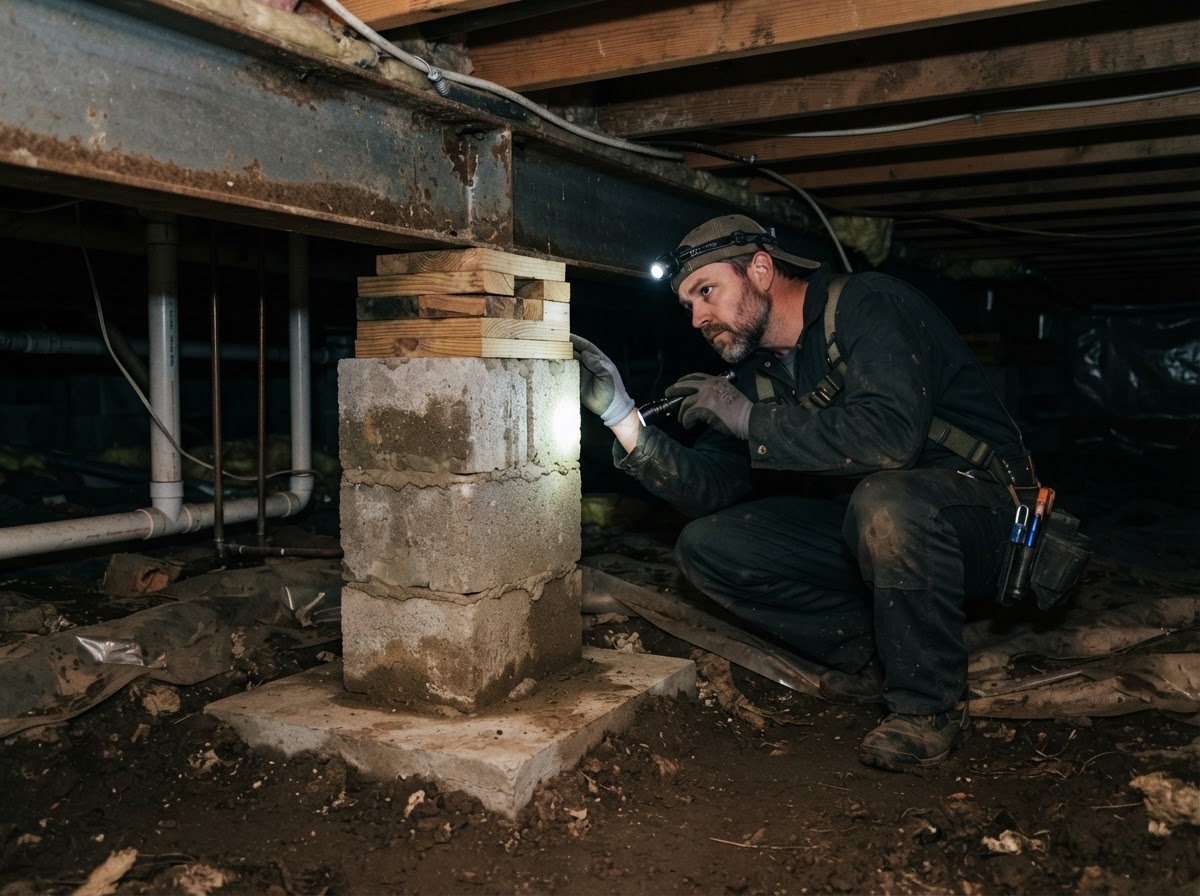
When a manufactured or mobile home shakes, rocks, or bounces noticeably as someone walks through it, the cause can come from the support system beneath the home, though a localized floor-system condition can create a similar feeling. A home that moves underfoot is usually telling you that the contact between the steel frame and the piers beneath it has changed, that one or more supports have moved, or that a specific section of the floor is flexing on its own. Homeowners in Millsboro and throughout Sussex County, DE often describe this as furniture shifting when someone walks nearby, a floor that feels bouncy or springy, a slight rocking sensation, or a creaking or knocking sound from underneath. Millsboro Mobile Home Leveling evaluates the visible support system beneath the home — the piers, blocks, pads, shims, and frame contact — to identify what appears to be happening and what type of service may be appropriate. A home that shakes when walked through is not automatically structurally unsafe, but movement underfoot should be understood rather than ignored.
Request Mobile Home Foundation Service
Serving Millsboro and all surrounding Sussex County communities.
Why a Mobile Home Can Shake or Rock Near Millsboro
A manufactured home may feel like it shakes or rocks when the contact between the frame and its supports has changed, when one or more supports have moved, or when a localized floor system is flexing on its own. The first question an evaluation answers is whether the movement is coming from the support system beneath the home or from the floor system above it.
Loose or Missing Shims
Shims transfer the frame's load onto each pier. When a shim loosens, compresses, or falls out, the frame above loses bearing at that point and can move slightly under a walking load.
Pier Movement
A pier that has shifted, leaned, or settled changes how the frame is held up. Even small lateral or vertical movement at a support point can let the frame flex more than it should.
Home Out of Level
When the home's elevation has changed, the load is no longer distributed evenly across the supports. Uneven loading can make the home feel livelier or less solid underfoot.
Reblocking / Setup Problems
Inconsistent or incomplete support work — supports spaced too far apart or set at different heights — can leave portions of the frame under-supported enough to move.
Frame Support Gaps
A visible gap between the frame and a pier, or between a shim and the pier cap, is a lost contact point. Several lost contacts in one area can make that area feel unstable.
Local Floor-System Movement
Bounce and movement can also come from the subfloor or floor framing above the frame, not from the foundation beneath it. An evaluation distinguishes the two because the repair is different.
Movement felt while walking can come from the support system, the floor system, or both. The evaluation's job is to read the supports beneath the home before assuming the cause is the foundation.
Common Causes of Mobile Home Movement When Walking
The conditions below describe the support-related causes most often found beneath a home that moves underfoot. Each one has to be inspected rather than assumed, because the same symptom can come from more than one source.
Shim Movement
Shims that have backed out, compressed, or fallen away let the frame drop the height of the gap, which shows up as bounce or movement when someone walks over it.
Settled Pier
A pier that has dropped relative to its neighbors lowers the frame at that point and can let the surrounding span flex.
Leaning or Shifted Pier
A pier that has tipped or moved sideways can reduce effective bearing and let the frame move laterally even when the elevation looks correct.
Settled Pad / Footing
When the bearing surface beneath a pier changes, the pier above follows it, and the frame contact above changes with it.
Inconsistent Support Height
Supports set at different heights leave the frame under-loaded at some points and over-loaded at others, which can create a bouncy feel rather than a solid one.
Broad Leveling Problem
A whole-home elevation change can leave the frame sitting unevenly across every support, which may feel like rocking rather than a single bounce.
Localized Floor Damage
Subfloor or floor-framing damage can flex under a walking load even when the supports beneath the home are level and intact.
Double-Wide Section Movement
When the two halves of a double-wide move relative to each other, the marriage-line area can feel unsteady, separate from the support condition beneath either section.
How Mobile Home Shaking & Rocking Is Evaluated
The evaluation first figures out where the movement is most noticeable, then reads the home's level and the accessible supports beneath the affected area to determine whether the cause appears to be the support system, the floor system, or a combination.
- 1
Identify where movement is most noticeable
Determine whether the shaking is worst in one room, along one side, near the marriage line, or across the whole home.
- 2
Determine the scope of the symptom
Decide whether the movement affects one room, one section, or the entire home, since the scope helps separate a local cause from a broad one.
- 3
Evaluate the home's level and elevation
Read how the frame sits now to see whether an elevation change is involved in the movement.
- 4
Inspect accessible supports beneath the home
Examine the piers, blocks, pads, shims, and frame-support areas that can be safely reached beneath the affected area.
- 5
Determine the apparent source of the movement
Identify whether the movement appears related to foundation support, section alignment, or a localized floor condition.
- 6
Match the service to the actual cause
Recommend re-leveling, reshimming, support repair, reblocking, or a separate floor-system evaluation based on what was actually found.
Foundation and leveling service addresses support-system causes. A bouncy floor caused by subfloor or floor-framing damage is a separate condition and is not repaired by leveling work alone.
Mobile Home Support Movement in Millsboro & Sussex County
Shaking and rocking concerns are evaluated for homeowners in Millsboro and across Sussex County, DE, including Long Neck, Dagsboro, Georgetown, Frankford, and Harbeson. How a home behaves underfoot varies according to single-wide versus multi-section design, the support layout, the existing piers, shim contact, previous leveling work, the floor-system condition, prior repairs, and how accessible the area beneath the home is. No claim is made that every manufactured home near Millsboro develops movement, and no universal regional cause is assumed for any specific property. The support and floor conditions under any given home are property-specific and have to be inspected.
Related Services
- Mobile Home Foundation RepairWhen the movement points to a damaged or failed support component.
- Mobile Home Structural Support RepairWhen the structural support beneath the home needs correction.
- Mobile Home Foundation & Leveling InspectionThe evaluation that reads the support condition first.
- Mobile Home Re-LevelingWhen the frame elevation has shifted and needs correcting.
Mobile Home Shaking or Rocking FAQs
Why does my mobile home shake when I walk through it?
A mobile home can shake when the contact between the steel frame and the piers beneath it has changed — often from loose or missing shims, a moved or settled pier, or a broader leveling change. A localized floor-system condition can also create a similar bounce. The actual cause has to be inspected beneath the home rather than assumed.
Can loose shims make a mobile home move?
Yes. Shims transfer the frame's load onto each pier. When a shim loosens, compresses, or falls out, the frame loses bearing at that point and can move or bounce under a walking load.
Can a sinking pier cause rocking or movement?
Yes. A pier that has dropped or moved changes how the frame is supported, which can let the home rock or feel less solid when someone walks through it.
Does shaking always mean the foundation is failing?
No. Movement underfoot can come from a loose shim, a single moved pier, a broad leveling change, or a floor-system condition unrelated to the foundation. Shaking alone does not prove the foundation has failed.
Can a bouncy floor be unrelated to the foundation?
Yes. Subfloor or floor-framing damage can flex under a walking load even when the supports beneath the home are level and intact. An evaluation distinguishes a floor-system cause from a support-system cause because the repair is different.
Can re-leveling reduce movement?
Re-leveling may reduce movement when the cause is a support-elevation change. If the movement is coming from the floor system or a failed support component, leveling alone may not address it.
Can double-wide homes move differently between sections?
Yes. When the two halves of a double-wide move relative to each other, the marriage-line area can feel unsteady separately from the support condition beneath either section.
Should visible support gaps be inspected?
Yes. A visible gap between the frame and a pier, or between a shim and a pier cap, is a lost contact point. Several lost contacts in one area should be evaluated because they can let the frame move underfoot.
Do you inspect mobile homes that shake or rock near Millsboro?
Yes. Millsboro Mobile Home Leveling evaluates shaking and rocking concerns for homeowners in Millsboro and across Sussex County, DE, including Long Neck, Dagsboro, Georgetown, Frankford, and Harbeson. Call 302-449-7221 to schedule.
Schedule a Mobile Home Support Inspection Near Millsboro
If your manufactured home shakes, rocks, or bounces when someone walks through it, contact Millsboro Mobile Home Leveling at 302-449-7221 to schedule a support and leveling inspection in Millsboro or the surrounding Sussex County area.
Request Mobile Home Foundation Service
Serving Millsboro and all surrounding Sussex County communities.