Signs a Manufactured Home Needs Foundation Repair
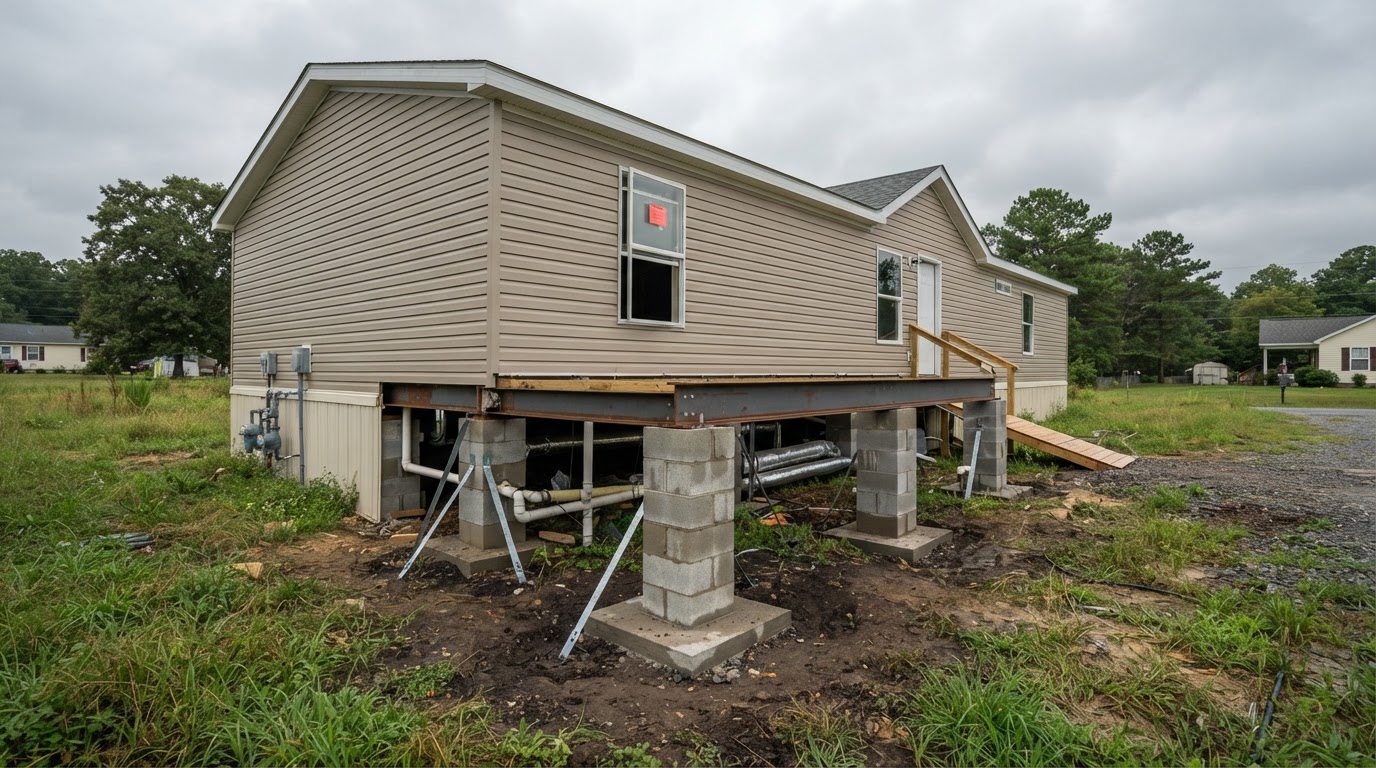
While simple floor slope or a sticking door can often be resolved with basic re-leveling, clear warning signs that a manufactured home needs actual foundation repair include crumbling CMU blocks, sinking or cracked concrete pads, visibly leaning piers, recurring loss of level shortly after re-leveling, water washout around support footings, and rusted or disconnected tie-down straps. Foundation repair addresses structural component damage beneath the home, whereas leveling simply adjusts the chassis elevation on existing sound supports.
Request Mobile Home Foundation Service
Serving Millsboro and all surrounding Sussex County communities.
In This Guide
- 1.Foundation Repair vs. Re-Leveling: What Is the Difference?
- 2.Leveling Symptom vs Foundation Repair Warning Sign
- 3.Visible Pier, Block, Pad & Shim Failure Signs
- 4.Why Recurring Movement Points to Deeper Support Issues
- 5.Foundation Warning Signs After Heavy Rain or Flooding
- 6.When to Request Leveling vs. Foundation Repair
- 7.Frequently Asked Questions & Professional Guidance
Visible Signs of Pier, Block, Pad, and Shim Failure
When inspecting the crawlspace or reviewing an inspection report, specific component defects indicate required foundation repair:
Cracked or Spalling CMU Blocks
Concrete blocks subjected to excessive point loads or freeze-thaw cycles can develop vertical stress cracks or crumble into debris, losing load capacity.
Tilted or Sinking Concrete Pads
Precast pads or footings resting on uncompacted soil can tilt sideways or sink several inches, causing severe frame sagging above.
Leaning Pier Columns
Piers that lean more than a few degrees out of vertical alignment are at risk of tipping under lateral loads or seismic movement.
Crushed, Rotted, or Missing Shims
Hardwood shims that have compressed, split, or rotted away leave air gaps between pier caps and steel I-beams, causing loose, bouncing floors.
Never attempt to crawl beneath an unstable manufactured home or knock out leaning pier blocks yourself. Hydraulic jacking and pier rebuilding require specialized safety equipment and structural training.
When to Request Leveling vs. Foundation Repair
Use this straightforward guide when choosing which service request fits your home's situation:
- Request Re-Leveling: If your home has minor floor slopes, doors sticking slightly, sound piers, intact pads, and no prior history of rapid settlement.
- Request Foundation Repair: If you see broken blocks, leaning piers, sunken pads, crushed shims, or if the home has gone out of level repeatedly.
- Request Anchoring Service: If tie-down straps are rusted, loose, snapped, or ground anchors are pulled out of the earth.
- Request Foundation Inspection: If you notice interior symptoms but cannot safely inspect beneath the home yourself.
For complete service descriptions, see Mobile & Manufactured Home Leveling and Mobile Home Foundation Repair.
What Are the Primary Signs a Manufactured Home Needs Foundation Repair?
Recognizing the difference between a simple elevation adjustment and a structural foundation repair is essential for manufactured homeowners:
- •Crumbling, spalling, or cracked concrete masonry unit (CMU) pier blocks beneath the main steel I-beams.
- •Concrete footings or pad blocks that are visibly cracked, tilted, or sinking into soft crawlspace soil.
- •Support piers that have shifted out of plumb (leaning piers) or separated from the main frame rail.
- •A home that repeatedly goes out of level within months of a previous professional re-leveling job.
- •Visible soil erosion, channeling, or water washout that has undermined the ground beneath support piers.
- •Heavy rust, breakage, or detachment on tie-down straps and ground anchor frame connections.
- •Ceiling seam gaps or marriage-line separation in double-wide homes that return despite repeated shimming.
Leveling Problem vs. Foundation Repair Warning Sign
Not every floor issue requires structural foundation repair. The table below compares common symptoms and their likely service category:
| Condition | Typical Scope |
|---|---|
| Slight Floor Slope / Minor Sticking Door | Likely a simple leveling issue. Settled shims or minor soil compaction adjusted via hydraulic jacking and hardwood shimming. |
| Leaning or Shifted Pier Column | Foundation Repair. Requires unloading the pier, excavating/leveling the pad, and rebuilding the pier plumb. |
| Crumbling or Cracked Concrete Blocks | Foundation Repair. Damaged CMU blocks have lost compressive strength and must be replaced with new structural blocks. |
| Sunken or Broken Concrete Pad | Foundation Repair. Requires pad excavation, soil stabilization, and installation of new high-density concrete footings. |
| Home Sinks Repeatedly at Same Corner | Foundation Repair / Stabilization. Points to active subsoil settlement or drainage washout requiring pad enlargement or stabilization. |
| Rusted or Disconnected Tie-Down Straps | Anchoring Repair. Requires replacing deteriorated steel straps and resetting or installing ground anchors. |
A professional crawlspace inspection is the most reliable way to confirm whether your home needs simple re-leveling, component repair, or both.
Why Recurring Movement Points to Deeper Support Issues
If your manufactured home was professionally leveled but begins sloping again within 6 to 12 months, the issue is rarely the re-leveling work itself — it indicates an unaddressed foundation failure:
Inadequate Footing Surface Area
Small or undersized concrete pads concentrate weight over too small an area of soft soil, causing continuous gradual sinking.
Uncontrolled Crawlspace Moisture
Standing water or high soil moisture softens crawlspace earth, turning bearing soil into unstable mud that cannot support pier loads.
Subsurface Erosion Channels
Rainwater runoff flowing beneath the home cuts hidden erosion channels that wash soil out from under concrete footings.
Overloaded Chassis Points
Missing intermediate piers force remaining piers to carry double their intended weight, exceeding pad soil bearing limits.
Foundation Warning Signs After Heavy Rain or Flooding
Sussex County's low-lying terrain and heavy coastal storms make water exposure a leading cause of manufactured home foundation damage:
- Visible mud pooling or standing water around concrete support pads after heavy rainstorms.
- Exposed concrete pad edges where rainwater runoff has washed away surrounding topsoil.
- New or sudden floor slopes that appear immediately following major storm or flooding events.
- Silt or sediment deposits left behind on pier blocks indicating flowing crawlspace water.
- For details on post-storm evaluation, see Foundation Movement After Heavy Rain and Crawlspace Erosion & Washout.
Official Sources & Educational Disclaimer
Primary educational references for manufactured home foundation standards include: 1) HUD Model Manufactured Home Installation Standards, 24 CFR Part 3285 (hud.gov); 2) Manufactured Housing Institute (MHI) Foundation Maintenance Guidelines (manufacturedhousing.org); and 3) Delaware Board of Manufactured Home Installation (regulations.delaware.gov). DISCLAIMER: This guide is general diagnostic information. Foundation conditions must be physically evaluated in the crawlspace by a qualified specialist. Do not attempt DIY structural repairs beneath a loaded manufactured home.
Frequently Asked Questions: Foundation Repair Warning Signs
Does an unlevel floor always mean my mobile home needs foundation repair?
No. Minor unlevel floors are often simple elevation changes resolved by re-leveling and shimming. Foundation repair is required when piers, pads, blocks, or site soil have physically failed.
Can a mobile home need both re-leveling and foundation repair?
Yes. In fact, foundation repair (such as replacing a broken pad or rebuilding a leaning pier) is almost always followed by re-leveling the chassis back to laser precision.
What causes concrete pier blocks to crumble under a mobile home?
CMU blocks crumble due to excessive point loads, manufacturing defects, moisture absorption, freeze-thaw cracking, or resting directly on damp earth without a moisture barrier.
Is a loose shim a sign of foundation failure?
A loose shim can be a simple bearing adjustment issue, or it can indicate that the pier below has dropped. If shims repeatedly fall out at the same pier, the foundation pad beneath is likely sinking.
Why does my mobile home keep going out of level every year?
Repeated settlement usually means the concrete footings are too small for the soil type, crawlspace moisture is softening the earth, or rainwater is washing away bearing soil.
Are rusted tie-down straps considered a foundation problem?
Rusted tie-downs are an anchoring system failure rather than a vertical load support failure. However, both systems work together to keep the home secure and should be repaired promptly.
How can I check my foundation without crawling under the home?
Look for exterior warning signs — unlevel skirting lines, gaps between skirting and ground, sticking doors, diagonal drywall cracks, or schedule a professional crawlspace inspection.
Who provides manufactured home foundation repair in Millsboro DE?
Millsboro Mobile Home Leveling specializes in manufactured home pier repair, pad stabilization, block replacement, reblocking, and re-leveling across Sussex County DE. Call 302-449-7221.
Not Sure If Your Home Needs Leveling or Foundation Repair?
Let Millsboro Mobile Home Leveling evaluate your manufactured home's crawlspace support system. Call 302-449-7221 today or request a foundation evaluation online.
Request Mobile Home Foundation Service
Serving Millsboro and all surrounding Sussex County communities.