Leaning or Shifted Mobile Home Pier Repair Millsboro
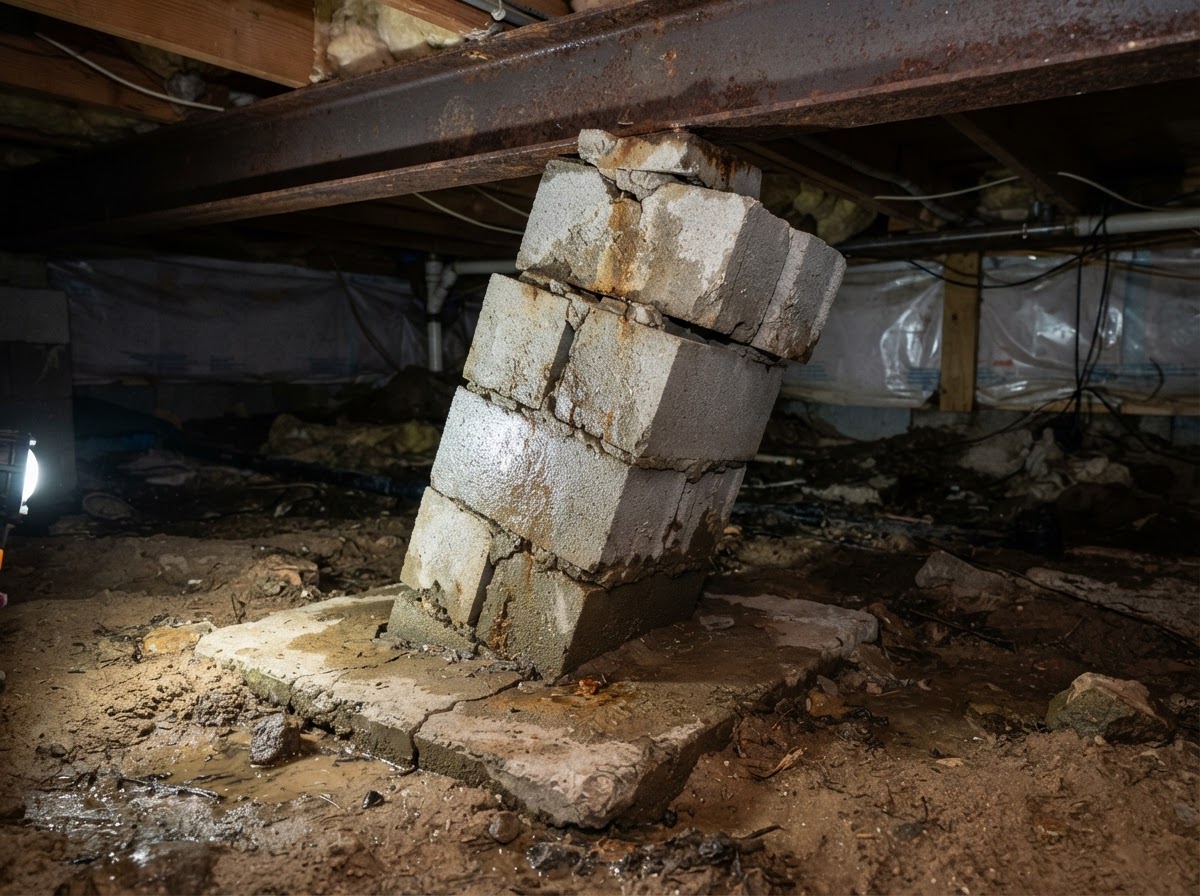
A manufactured-home pier is meant to sit plumb and centered beneath the frame support point above it. When a pier leans, shifts sideways, rotates, or becomes misaligned, the contact between the frame and the pier may no longer be distributed the way it was intended, and the floor elevation above can change as the support moves off-center. A leaning or shifted pier is a lateral movement problem, which is different from a sinking pier that primarily drops downward. Homeowners in Millsboro and throughout Sussex County, DE usually notice this as a pier visibly leaning off plumb, blocks that appear offset or stacked unevenly, a pier no longer centered beneath the frame support, shims partly pushed out of place, or a gap opening on one side of the support. Millsboro Mobile Home Leveling evaluates the visible alignment of the pier, the pad and blocks beneath it, and the frame contact above it to identify what appears to be happening and what type of repair may be appropriate. A leaning pier does not always need full replacement — the repair is matched to the actual condition found.
Request Mobile Home Foundation Service
Serving Millsboro and all surrounding Sussex County communities.
Leaning Mobile Home Pier Repair Near Millsboro
A leaning or shifted pier has moved out of its intended alignment beneath the manufactured-home frame. This is a lateral movement condition: a sinking pier primarily moves downward, while a leaning or shifted pier primarily moves sideways, tilts, rotates, or loses its centered position beneath the frame support above it.
Pier Leaning Sideways
A pier that has tipped off plumb no longer presents a vertical column to the frame above it, which changes how the load is carried and can let the support lose effective height.
Blocks Shifted Out of Alignment
Block piers are built in a stack. When one or more blocks shift out of alignment, the pier loses its clean vertical column and the bearing above it changes.
Pier Moves Across the Pad
A pier that has slid across its pad is no longer centered on the bearing surface beneath it, which can reduce the pad's effective support.
Frame Contact Becomes Off-Center
When the pier leans or shifts, the frame contact above it may no longer sit centered on the pier cap, concentrating the load on one side.
Shims Become Displaced
As the pier moves, the shims above it can be pushed partly out of place or compressed on one side, which contributes to uneven frame contact.
Pier Is Both Leaning & Settling
A pier can lean and settle at the same time. When both are present, the evaluation reads each movement separately because the repair can differ.
A leaning or shifted pier is a lateral movement condition, not the same as a sinking pier. The repair is matched to whether the pier has moved sideways, dropped, or both.
What Can Cause a Mobile Home Pier to Lean or Shift
Pier misalignment has several possible sources. The conditions below describe the causes most often found beneath a leaning or shifted support, but each one has to be confirmed by inspection rather than assumed from the lean alone.
Movement at the Pad / Footing
When the pad beneath a pier shifts or settles unevenly, the pier above it can tip or slide off its bearing base.
Settlement on One Side of the Pier
If the bearing beneath one edge of a pad drops more than the other, the pier above can lean toward the settled side.
Poor Previous Reblocking
Earlier support work that stacked blocks unevenly, or set a pier off-center on its pad, can lean or shift as the home loads it over time.
Displaced Blocks
A block knocked or shifted out of its stack breaks the vertical column and lets the pier lean.
Shim / Bearing Movement
When shims above a pier move, the load above can shift off-center and push the pier sideways.
Erosion or Washout
Water movement beneath the home can disturb the bearing material on one side of a pad and let the pier above lean toward the weakened side.
Broader Foundation Movement
A leaning pier can be one symptom of a wider support movement rather than an isolated problem.
Previous Impact or Disturbance
A pier bumped during work beneath the home, or disturbed by a prior repair, can end up off-center even when the bearing beneath it is sound.
How a Shifted Mobile Home Pier Is Evaluated
The evaluation reads the visible alignment of the pier and the frame contact above it first, then determines whether the pier has shifted, leaned, settled, or moved in more than one way, and finally inspects the pad, blocks, and shims to match the repair to the actual condition.
- 1
Inspect the visible pier alignment and frame contact
Read whether the pier sits plumb and centered beneath the frame support, and how the shims above it are seated.
- 2
Determine the type of movement
Decide whether the pier has shifted sideways, leaned off plumb, settled downward, or experienced more than one type of movement.
- 3
Inspect the pad, blocks, shims, and surrounding support
Examine the bearing surface beneath the pier, the block stack, the shims, and the supports beside it for context.
- 4
Determine whether the condition is isolated or broad
Decide whether one pier has moved or whether the lean is part of a broader reblocking or foundation movement.
- 5
Identify the appropriate repair
Determine whether the condition requires pier correction, replacement, pad repair, reshimming, reblocking, or stabilization.
- 6
Recheck support alignment after correction
After the agreed work, recheck the pier alignment and frame contact to confirm the correction held.
Homeowners should not restack blocks or lift the frame to re-align a leaning pier themselves. The repair is matched to the actual movement — correction, replacement, pad repair, reshimming, reblocking, or stabilization — rather than simply pushing the pier back into place.
Leaning & Shifted Mobile Home Piers in Millsboro & Sussex County
Leaning and shifted pier repair is provided for homeowners in Millsboro and across Sussex County, DE, including Long Neck, Dagsboro, Georgetown, Frankford, and Harbeson. The correction depends on the pier type, the block configuration, the pad and footing condition, the frame-support location, the shim condition, any settlement present, prior repairs, and how accessible the area beneath the home is. No unsupported claim is made about a specific regional cause of pier leaning, and no universal local condition is assumed for any property. The alignment and bearing conditions beneath any given pier are property-specific and have to be inspected.
Related Services
- Mobile Home Foundation & Leveling InspectionThe evaluation that reads the pier alignment before recommending repair.
- Mobile Home Foundation RepairWhen the shifted pier points to a damaged support component.
- Mobile Home Block Pier Repair & ReplacementWhen the block stack is the source of the lean.
- Mobile Home Setup Correction & ReblockingWhen several piers need broader correction.
Leaning or Shifted Mobile Home Pier FAQs
Why would a mobile home pier start leaning?
A pier leans when something beneath or around it changes — most often movement at the pad or footing, settlement on one side of the pier, a displaced block, poor prior reblocking, or erosion that weakens one side of the bearing. The actual cause has to be inspected at the affected pier.
Is a leaning pier different from a sinking pier?
Yes. A sinking pier primarily moves downward. A leaning or shifted pier primarily moves sideways, tilts, rotates, or loses its centered position beneath the frame. A pier can do both at once, in which case each movement is read separately because the repair can differ.
Can a pier shift sideways on its pad?
Yes. A pier can slide across its pad so that it no longer sits centered on the bearing surface beneath it, which reduces the pad's effective support.
Can a leaning pier cause uneven floors?
Yes. When a pier leans or shifts, the frame contact above it can change enough to affect the floor elevation in that area, even when the pier has not dropped.
Can loose shims make a shifted pier worse?
They can contribute to it. When shims above a pier move, the load above can shift off-center and push the pier sideways, so the shims and the pier are both evaluated together.
Does a leaning pier always need full replacement?
No. The repair is matched to the actual condition. A leaning pier may be correctable, may need reblocking, or may need replacement — the scope depends on what is found, not on the lean alone.
Can multiple leaning piers require reblocking?
Yes. When several piers have moved, a broader reblocking or support correction may be more appropriate than correcting one pier at a time.
Should the pad beneath a shifted pier also be inspected?
Yes. A pier often shifts because the pad or footing beneath it has moved or settled unevenly, so the bearing surface is inspected along with the pier above it.
Do you repair leaning mobile home piers near Millsboro?
Yes. Millsboro Mobile Home Leveling repairs leaning and shifted piers for homeowners in Millsboro and across Sussex County, DE, including Long Neck, Dagsboro, Georgetown, Frankford, and Harbeson. Call 302-449-7221 to schedule.
Schedule Leaning or Shifted Pier Repair Near Millsboro
If a pier beneath your manufactured home has leaned, shifted, or moved out of alignment, contact Millsboro Mobile Home Leveling at 302-449-7221 to schedule a pier and foundation evaluation in Millsboro or the surrounding Sussex County area.
Request Mobile Home Foundation Service
Serving Millsboro and all surrounding Sussex County communities.