Gap Between Mobile Home Pier & I-Beam Millsboro
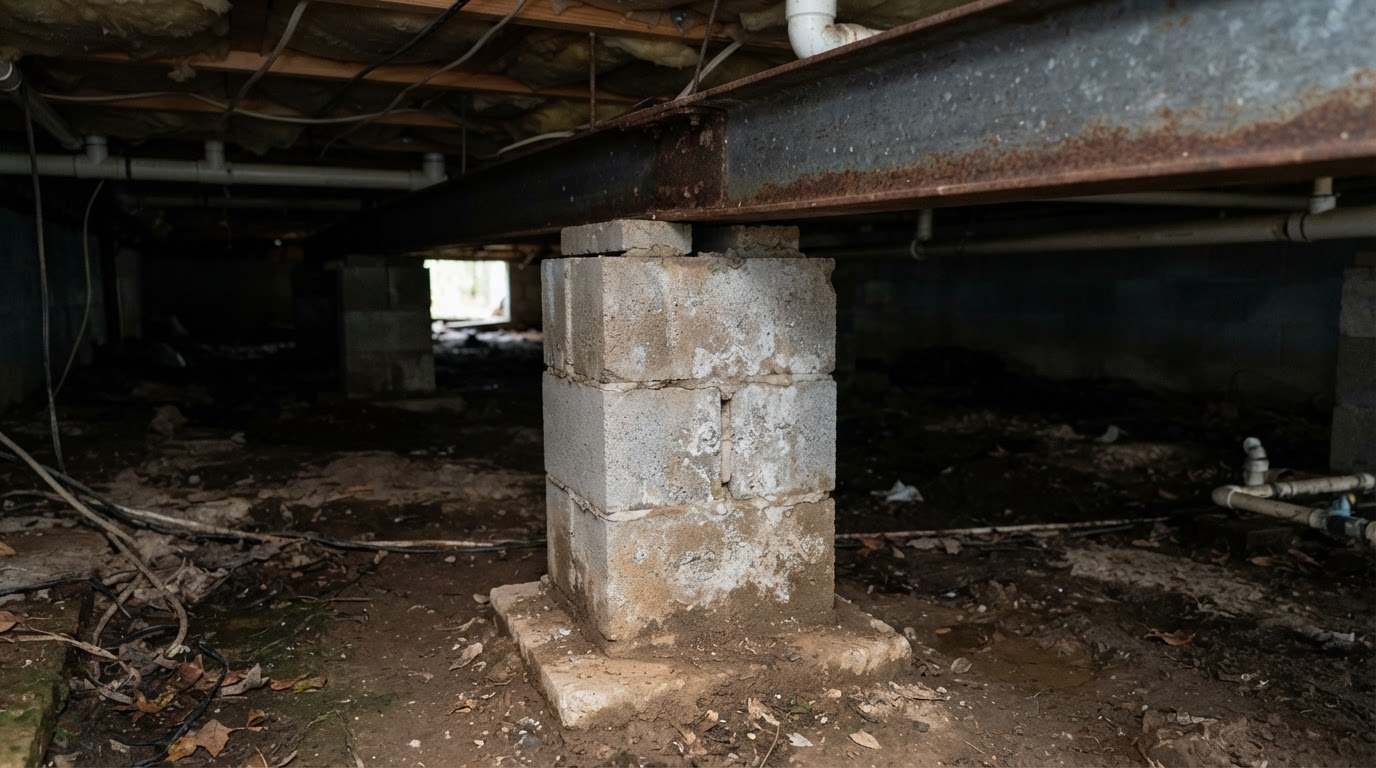
A visible loss of intended support contact between the manufactured-home frame and a pier should be evaluated rather than assumed to be a single shim problem. The gap may result from a missing or loose shim, pier or pad settlement, frame movement, or another support-system change, and the underlying cause determines the correct repair. A gap does not automatically mean the home is unsafe, but lost contact at a support point changes how the frame carries load and can let the beam or floor above it move. Millsboro Mobile Home Leveling evaluates the gap, the pier beneath it, the pad beneath the pier, and the level of the home together to determine whether the appropriate path is reshimming, pier repair, pad repair, reblocking, or stabilization rather than simply filling the opening.
Request Mobile Home Foundation Service
Serving Millsboro and all surrounding Sussex County communities.
What Causes a Gap Between a Pier & Manufactured Home Frame
A gap at a pier-to-beam interface is a symptom, not a diagnosis. Several different conditions can produce the same visible opening, which is why the support beneath the gap has to be read before deciding what repair is appropriate.
Missing Shim
A shim that has fallen out or was never installed leaves a space between the pier cap and the beam. The gap matches the thickness of the missing shim.
Shifted or Compressed Shim
A shim that has slid sideways, split, or compressed no longer fills the bearing point, leaving a partial gap even though the pier itself has not moved.
Pier Settlement
A pier that has sunk relative to the beam lowers the top of the support away from the steel, opening a gap that grows as the pier drops.
Pad Settlement
When the bearing pad beneath a pier tilts or sinks, the pier above it follows, and the top of the pier drops away from the frame.
Block Movement
A block stack that has shifted laterally or lost a course changes the height of the pier, which can open a gap at the beam.
Frame Deflection
A beam that has sagged between supports can lift away from a pier that is still at its original height, producing a gap from the frame side rather than the support side.
Prior Re-Leveling History
A home that has been re-leveled may carry gaps from earlier support changes that were not fully corrected, leaving contact that is incomplete rather than lost.
The visible gap is the symptom. The underlying cause — shim, pier, pad, block, or frame — determines the correct repair, which is why the support beneath the gap is read before any correction is made.
Pier-to-Frame Gap vs Loose or Missing Shims
A shim problem and a support gap are related but not identical. A loose or missing shim is one cause of a gap; settlement or frame movement is another. The distinction matters because reshimming alone will not fix a gap that came from below the shim.
| Condition | Primary Area of Movement |
|---|---|
| Shim fell out | Bearing interface — shim replacement may address it |
| Pier lowered | Support assembly — reshimming alone may not hold |
| Pad tilted or sank | Bearing surface below the pier — pad evaluation needed |
| Block stack shifted | Pier component — block correction or reblocking may be needed |
| Beam deflected away | Frame side — support restoration plus frame review |
| Home re-leveled previously | Prior support history — full contact may be incomplete |
Foundation Problems That Can Create Lost Support Contact
A pier-to-beam gap rarely exists in isolation. The conditions below frequently accompany a visible gap, and the evaluation reads them together because correcting only the gap can leave the underlying cause in place.
Pier Sinking
A pier that has settled drops the support away from the beam, opening a gap that reshimming will only temporarily close until the pier is stabilized.
Leaning or Shifted Pier
A pier that has tipped laterally can lose full bearing even when its height has not changed, producing a partial gap and uneven contact.
Pad Sinking or Tilting
When the bearing pad moves, the pier above it follows, and the gap at the beam reflects movement at the ground level.
Reblocking Need
Where several supports have shifted, the broader pier-and-block arrangement may need reblocking rather than individual shim correction.
Frame Deflection
A beam that has sagged between supports can lift away from a pier that has not moved, creating a gap that comes from the frame rather than the support.
Soft-Soil Settlement
Bearing soil that has softened or consolidated can let a pad and pier drop together, with the gap appearing at the beam above.
Erosion or Washout
Material removed from beneath a pad can let the support settle, opening a gap that returns after reshimming until the bearing condition is addressed.
When a Support Gap Needs More Than Reshimming
Reshimming restores contact between the frame and a pier, but it does not correct a pier that has settled, a pad that has tilted, or a beam that has deflected. When the cause is below the shim, replacing contact material alone may not hold, and the same gap can return as the support continues to move.
- ▸A gap that has grown since it was first noticed
- ▸A gap at a pier that also appears tilted or shifted
- ▸Soil separation or washout around the pad beneath the gap
- ▸Multiple gaps along one section of the home
- ▸A gap that returns after a prior reshimming
- ▸Floor movement or slope at the same location as the gap
- ▸The home repeatedly goes out of level at the affected support
Where the gap reflects settlement, pad movement, or a broader reblocking need, the support system beneath the shim has to be evaluated and corrected rather than simply filling the opening. Homeowners should not crawl beneath a home to force shims into a loaded gap themselves.
Related Services
- Mobile Home Shimming & ReshimmingThe shim service when the gap is a shim-only problem.
- Mobile Home Pier Repair & ReplacementWhen the pier beneath the gap has moved or failed.
- Mobile Home Concrete Footing & Pad RepairWhen the pad beneath the pier has tilted or sunk.
- Mobile Home Setup Correction & ReblockingWhen several supports need broader correction.
- Manufactured Home Foundation StabilizationWhen the bearing surface beneath the support needs to be stabilized.
- Mobile Home Foundation & Leveling InspectionThe evaluation that reads the gap, the pier, the pad and the level together.
Pier-to-I-Beam Gap FAQs
What causes a gap above a mobile home pier?
A gap can come from a missing or loose shim, a pier that has settled, a pad that has tilted, a block stack that has shifted, or a beam that has deflected away from the support. The visible opening is a symptom, and the support beneath it has to be read to identify the cause.
Can a missing shim create a visible gap?
Yes. A shim that has fallen out or was never installed leaves a space that matches the shim thickness. When the shim is the only problem, reshimming restores contact.
Can a sinking pad create the gap?
Yes. When the bearing pad beneath a pier tilts or sinks, the pier above it follows and the top of the pier drops away from the beam, opening a gap that reshimming alone may not hold.
Can the home still be level with one support gap?
A single small gap may not immediately change the level, but lost contact at a support changes how the frame carries load and can let the beam or floor above it move over time. The gap should be evaluated even when the level still reads acceptably.
Does every gap require pier replacement?
No. Some gaps are shim-only problems; others reflect pier or pad settlement that can be corrected without replacing the whole pier. The repair follows the actual cause rather than assuming the worst case.
Can reblocking correct multiple support gaps?
Yes, where several supports have shifted. Reblocking corrects the broader pier-and-block arrangement rather than a single shim, which is appropriate when the gaps reflect a wider support problem.
Should I inspect neighboring supports too?
Yes, where one gap is visible. Bearing conditions are often consistent across a section of the crawlspace, and adjacent supports can be affected even when only one gap is obvious.
Do you evaluate pier-to-beam gaps near Millsboro?
Yes. Millsboro Mobile Home Leveling evaluates pier-to-I-beam gaps for homeowners in Millsboro and across Sussex County, DE. Call 302-449-7221 to schedule.
See a Gap Between a Pier & Your Mobile Home Frame?
If a visible gap has opened between a manufactured-home pier and the I-beam above it, contact Millsboro Mobile Home Leveling at 302-449-7221 to schedule a support, pad and leveling evaluation in Millsboro or the surrounding Sussex County area.
Request Mobile Home Foundation Service
Serving Millsboro and all surrounding Sussex County communities.