Mobile Home Park Foundation, Lot Drainage & Repair Responsibilities in Delaware
There is no universal rule that the park owner always pays or that the homeowner always pays. Responsibility for foundation or drainage problems in a Delaware mobile home park can depend on who owns the home, who controls the lot, the lease terms, community rules, the cause of the condition, and applicable Delaware law. This page provides general information about Delaware manufactured-home-community rules and foundation-service considerations — it is not legal advice.
Request Mobile Home Foundation Service
Serving Millsboro and all surrounding Sussex County communities.
In This Guide
- 1.Who Is Responsible for Foundation or Drainage Problems?
- 2.How Delaware Manufactured Home Communities Are Structured
- 3.Lot Drainage & Standing Water Responsibilities
- 4.Home Support Components vs Lot Conditions
- 5.Private Land vs a Rented Mobile Home Lot
- 6.What a Foundation Contractor Can Determine
- 7.Frequently Asked Questions & Official Sources
How Delaware Manufactured Home Communities Are Structured
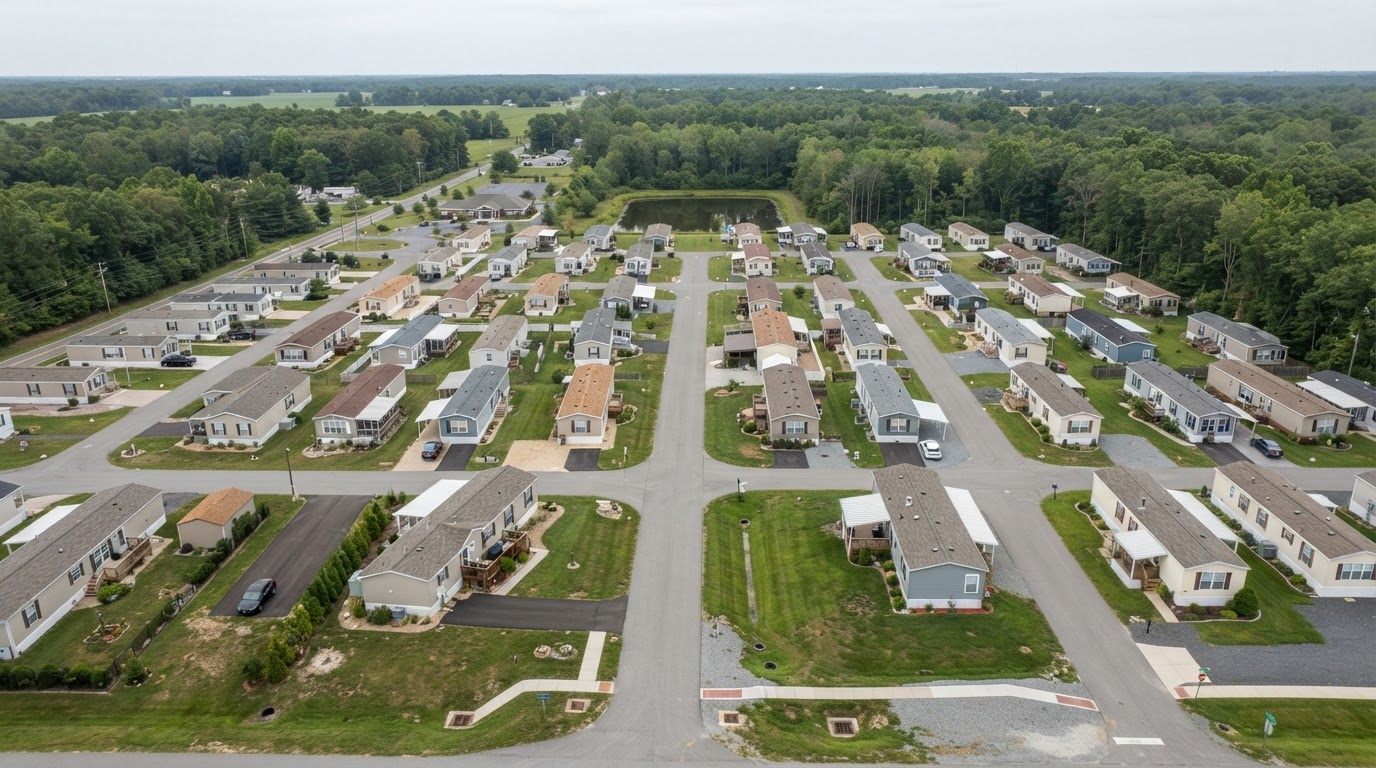
Understanding who owns what is the foundation of the responsibility question. Delaware law recognizes distinct roles within a manufactured-home community:
Community Owner / Landlord
The party that owns the land and operates the community, generally responsible for the common areas and lot conditions addressed by Delaware law and the lease.
Homeowner / Tenant
The party that owns the manufactured home and rents the lot it sits on, generally responsible for the home itself and obligations set by the lease and Delaware law.
Rented Lot
The parcel of land within the community that the homeowner leases from the community owner — distinct from owning both the home and the land.
Manufactured-Home Community
A community of leased lots for manufactured homes, governed in Delaware by the Manufactured Home Owners and Community Owners Act (Delaware Code Title 25, Chapter 70).
This is a concise summary, not a reproduction of the statute. Delaware Code Title 25, Chapter 70 addresses the rights and obligations of community owners and homeowners; the specific provisions that apply to a situation depend on the facts and the lease. Read the statute directly for current language.
What a Foundation Contractor Can Determine
Millsboro Mobile Home Leveling can evaluate physical conditions beneath a manufactured home, but it does not determine legal responsibility between a homeowner and a community owner. A contractor's role is to describe and, where authorized, correct the physical system — not to assign who pays:
- •Out-of-level condition — whether the home has shifted elevation.
- •Pier movement — a leaning, shifted, or settled support.
- •Block movement — a displaced or damaged block in a pier stack.
- •Pad or support concerns — a settled, cracked, or displaced bearing pad.
- •Erosion around supports — material loss affecting bearing.
- •Anchoring concerns — visible strap, anchor, or connection condition.
These are physical findings. The legal question of who is responsible for the cause or the repair depends on ownership, lot control, the lease, and Delaware law — questions for the parties and, where needed, legal counsel, not for a foundation contractor.
Home Support Components vs Lot Conditions
A useful way to separate the questions is to ask, for each issue, who owns or controls the component involved. These are questions to investigate — not determinations a contractor can make:
- Pier / block system: who owns and maintains the home's support system?
- Lot drainage: who controls the affected lot area?
- Erosion: what caused the soil movement, and whose area is affected?
- Tie-down system: who owns and maintains the installed anchoring system?
- Standing water: what do Delaware law and the lease terms require of each party?
- Pad settlement: is the cause related to the home's support, the lot condition, or both?
A foundation contractor can describe the physical condition but cannot decide who is legally responsible. Responsibility may depend on home ownership, lot control, lease terms, cause of damage, and applicable law.
Who Is Responsible for Foundation or Drainage Problems in a Delaware Mobile Home Park?
Responsibility is not a single answer. It depends on ownership, control, the lease, and the cause of the condition:
- •There is no universal rule that the park owner always pays for foundation repair.
- •There is no universal rule that the homeowner always pays for foundation repair.
- •Who owns the home and who controls the lot both matter.
- •Lease terms and community rules can affect responsibility.
- •The physical cause of the condition — support failure, lot drainage, erosion — is a separate question from legal responsibility.
- •Delaware law addresses certain community-owner and homeowner obligations, but it does not assign every repair by default.
- •This page is general information, not legal advice.
Lot Drainage & Standing Water Responsibilities
Delaware law addresses certain community-owner obligations relating to lot maintenance and the handling of standing or moving water. The physical connection between water and foundation movement is real, but it does not by itself assign repair responsibility:
| Condition | Typical Scope |
|---|---|
| Lot maintenance / regrading | Where Delaware law or the lease assigns lot maintenance to the community owner, drainage and grading obligations may follow that assignment. |
| Standing or moving water | Delaware law addresses certain community-owner obligations regarding standing or moving water where supported by statute; verify current provisions in Title 25, Chapter 70. |
| Erosion from runoff | Runoff that washes out bearing material can move piers and pads, but the source of the water and the responsibility for the lot are separate questions. |
| Washout around supports | Material loss around a pad or pier is a physical condition; who is responsible for correcting the cause depends on lot control and the lease. |
| Pier movement from water | A pier that settles after washout is a support problem, but the water source that caused the washout may be a lot-drainage issue owned by a different party. |
Do not conclude that because water caused a support problem, a specific party must pay. Physical cause and legal responsibility are separate questions, and the answer depends on ownership, control, the lease, and Delaware law.
Private Land vs a Rented Mobile Home Lot
The ownership model changes how the responsibility questions apply, because it changes who controls the land beneath the home:
- On private land, the owner may own both the home and the property, so support, drainage, and anchoring questions all point to one party.
- In a community, the homeowner may own the home while renting the lot, so the home's supports and the lot's drainage can involve different parties.
- That distinction matters when evaluating drainage, grading, and erosion — the party controlling the lot is not always the party owning the home.
- It also matters for anchoring and support repair, where the component and the ground it bears on may be controlled by different parties.
- Lease terms can shift or clarify obligations either way, so the lease is part of the responsibility question.
Official Sources & Regulatory Disclaimer
Primary references include: 1) Delaware Code Title 25, Chapter 70 — Delaware Manufactured Home Owners and Community Owners Act (delcode.delaware.gov); 2) Delaware Department of Justice, Consumer Protection Unit (delaware.gov); 3) Delaware Manufactured Home Relocation Authority where relevant; 4) Sussex County Code & Building Permit Regulations (sussexcountyde.gov). DISCLAIMER: This page is general information, not legal advice. Responsibility may depend on home ownership, lot control, lease terms, cause of damage, and applicable law. For a specific dispute, consult the lease, the applicable Delaware statutes, and qualified legal counsel.
Frequently Asked Questions: Park Foundation & Drainage Responsibility
Does the park always pay for foundation repair?
No. There is no universal rule that the park owner pays for every foundation repair. Responsibility can depend on who owns the home, who controls the lot, the lease, the cause of the condition, and Delaware law.
Does the homeowner always pay?
No. There is no universal rule that the homeowner pays for every foundation repair either. The same factors — ownership, lot control, lease, cause, and law — determine responsibility for a given situation.
Does Delaware law address standing water in mobile home parks?
Delaware Code Title 25, Chapter 70 addresses certain community-owner and homeowner obligations, including provisions relating to lot conditions. Verify the current provisions directly in the statute, because this page is general information and not legal advice.
What if runoff caused pier settlement?
Runoff can wash out bearing material and allow a pier to settle, but the source of the water and responsibility for the lot are separate from the support repair itself. Physical cause does not automatically assign legal responsibility.
Can lease terms affect responsibility?
Yes. Lease terms can shift or clarify obligations between a homeowner and a community owner. The lease is part of the responsibility question alongside ownership, lot control, and Delaware law.
Does a foundation contractor decide who pays?
No. A foundation contractor can describe and, where authorized, correct the physical condition. It does not determine legal responsibility between a homeowner and a community owner — that depends on ownership, control, the lease, and the law.
What if I own both the home and the land?
On private land where one party owns both the home and the property, support, drainage, and anchoring questions generally point to that one owner. The community-vs-private-land distinction is what changes the analysis.
What if I own the home but rent the lot?
In a community where you own the home but rent the lot, the home's supports and the lot's drainage can involve different parties. Responsibility depends on the lease, lot control, the cause of the condition, and Delaware law.
Need a Physical Foundation Evaluation in a Delaware Community?
Millsboro Mobile Home Leveling can evaluate the visible foundation, support, drainage-impact, and anchoring condition of a manufactured home in a Delaware community. Responsibility questions should be directed to the lease, the applicable Delaware statutes, and qualified counsel. Call 302-449-7221 or request service online.
Request Mobile Home Foundation Service
Serving Millsboro and all surrounding Sussex County communities.