
Mobile Home Ground Anchor Installation & Replacement Millsboro
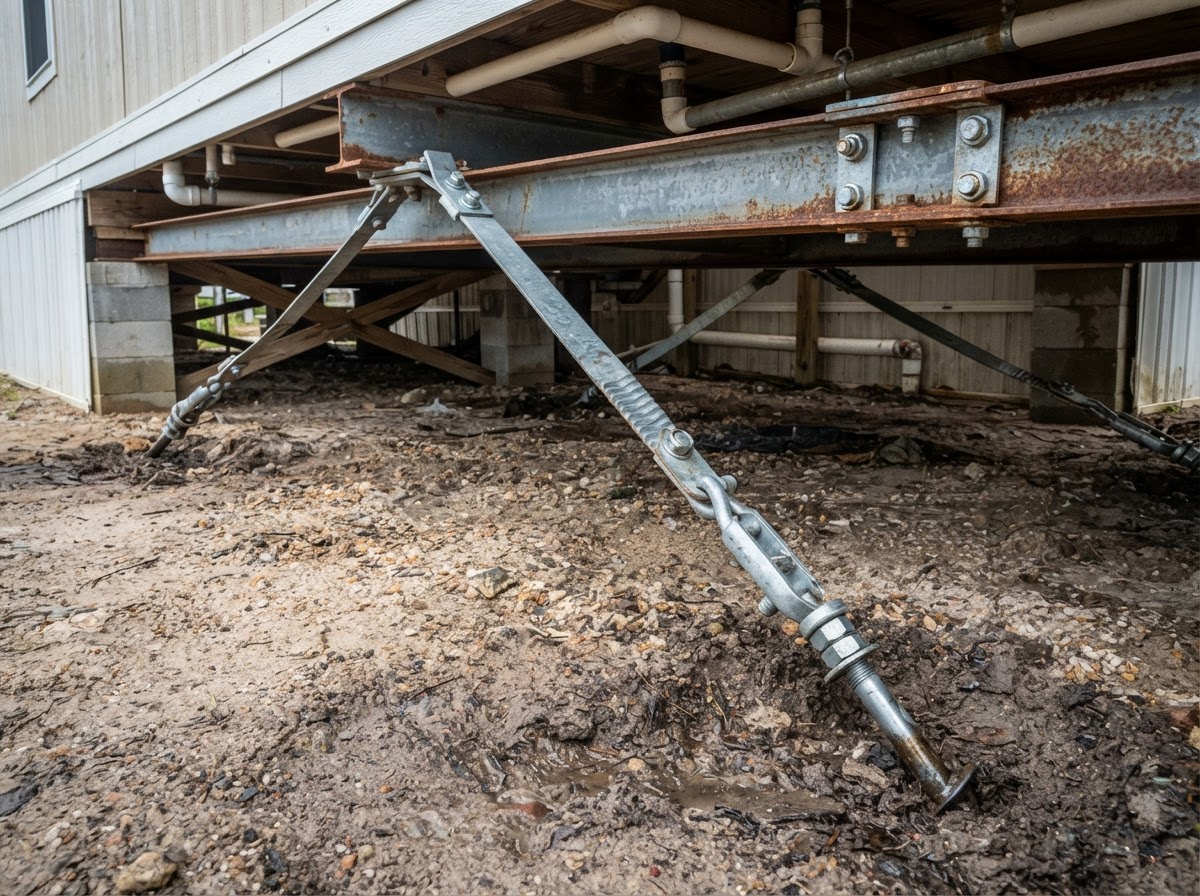
Ground anchors are a key part of many manufactured-home anchoring systems, providing the anchoring point below or at ground level that tie-down straps or related components connect to. Millsboro Mobile Home Leveling installs and replaces ground anchors for homeowners in Millsboro and throughout Sussex County, DE. Ground anchor service may be appropriate when an anchor is missing, visibly damaged, appears shifted or disturbed, has corroded heavily, no longer suits the existing tie-down connection, or was affected by movement. A tie-down strap can only do its job if the anchor it connects to is present and serviceable, so an anchoring system with a failed or missing anchor is incomplete regardless of how the straps read.
Request Mobile Home Foundation Service
Serving Millsboro and all surrounding Sussex County communities.
Mobile Home Ground Anchor Installation Near Millsboro
Ground anchors provide the anchoring points that tie-down straps or related components connect to as part of the manufactured-home anchoring system. Without a sound anchor at the end of the connection path, a sound strap has nothing reliable to hold against, which is why the anchor and the strap are evaluated together rather than as separate parts.
Missing Ground Anchors
An anchoring system with a missing anchor is incomplete. A tie-down connected to nothing — or to a point that was never anchored — cannot provide the resistance it was designed for, and a missing anchor should be evaluated for installation so the system is complete again.
Damaged Anchors
A ground anchor that is bent, broken, or visibly deteriorated may no longer hold the way it was intended. Visible structural damage to an anchor head or shaft warrants evaluation of whether the anchor can still do its job or needs replacement.
Shifted or Disturbed Anchors
An anchor that has moved, pulled, or been disturbed may no longer be positioned the way the anchoring system was designed around. Movement can reduce the anchor's effectiveness even when the anchor itself is not broken, which is why shifted anchors are evaluated rather than assumed serviceable.
Corroded Anchor Components
Heavy corrosion on an anchor head, shaft, or connection hardware can reduce the capacity of the anchoring point. As with straps, corrosion is judged by how far it has progressed rather than by the presence of rust alone.
Anchor / Strap Connection Problems
The anchor and the strap work as one connected system. A sound anchor with a failed strap, or a sound strap with a failed anchor, both leave the connection path incomplete, which is why the two are evaluated together rather than in isolation.
Existing System Evaluation
Anchor replacement should consider the rest of the anchoring system rather than treating the anchor as a standalone part. Installing a new anchor without checking the straps, frame connections, and the rest of the path can leave a different weak link in place.
No installation depth, anchor type, soil-class specification, or spacing requirement is provided here. Those details depend on the home, the site, the applicable standards, and the jurisdiction, and they should be verified against current requirements rather than assumed from a service page.
How Mobile Home Ground Anchors Are Evaluated
An anchor evaluation reads the anchor, the strap it connects to, and the frame attachment as one connection path, because a failure at any point leaves the system incomplete. The process identifies whether the concern is the anchor, the strap, the connection, or a combination.
- 1
Review visible anchor concerns and history
Discuss what was noticed — a missing anchor, visible damage, shifting, corrosion, or a strap with nothing to hold — and any recent inspection or storm history.
- 2
Identify accessible ground anchors and strap connections
Locate the visible ground anchors and the tie-down connections that can be safely reached and inspected around the home.
- 3
Check for missing, damaged, displaced, or deteriorated components
Examine each accessible anchor for presence, visible damage, movement, and corrosion, along with the condition of the strap connections at each anchor.
- 4
Evaluate the relationship between anchors, straps, and frame connections
Read the full connection path at each point, because a sound anchor with a failed strap — or a sound strap with a failed anchor — still leaves the system incomplete.
- 5
Determine the appropriate service scope
Decide whether anchor installation, anchor replacement, strap replacement, retensioning, or a broader anchoring correction is appropriate based on what the inspection found.
- 6
Complete the agreed work and recheck connections
Perform the agreed anchor work and recheck the visible anchoring connections that were serviced to confirm the path is complete.
No exact anchor spacing, installation depth, anchor type by soil class, torque requirement, strap angle formula, or engineering table is provided here. Those details depend on the home, the site, and the applicable standards, and they must be verified against current requirements rather than assumed.
How Ground Anchors & Tie-Down Straps Work Together
A ground anchor and a tie-down strap are two parts of the same connection path. The anchor provides the anchoring point at or below ground, and the strap connects the manufactured home to that point. A failure at either end — or at the frame attachment in between — leaves the path incomplete, which is why the whole path is evaluated rather than the anchor alone.
Ground Anchor
The ground anchor is the anchoring point at or below ground level. Its job is to hold against the uplift and lateral loads the anchoring system is designed to resist, and installation specifics vary with the home, the site, and the applicable standards.
Tie-Down Strap
The tie-down strap is the connecting member between the home or its frame and the ground anchor. A sound anchor with a corroded or broken strap still leaves the path incomplete, which is why strap condition is checked alongside the anchor.
Frame Attachment
The frame attachment is the point where the anchoring system connects to the home — a frame bracket, I-beam clip, or tensioning hardware. A corroded or bent frame attachment can become the weak link even when the anchor and strap are sound.
Missing Component
The system depends on the complete connection path. A missing anchor, a missing strap, or a disconnected frame attachment each leave the system incomplete in a different way, and the path is evaluated end to end.
Damaged Anchor but Intact Strap
When the anchor is damaged but the strap looks serviceable, the anchor may still require correction. A sound strap on a failed anchor is still a failed connection, because the strap has nothing reliable to hold against.
Damaged Strap but Intact Anchor
The reverse is also true: a sound anchor with a broken or missing strap leaves the path incomplete. In that case the strap, not the anchor, is the component that needs attention.
Mobile Home Ground Anchor Service in Millsboro & Sussex County
Ground anchor service for homes in Millsboro and across Sussex County accounts for coastal Delaware conditions, where wind exposure and soil moisture can be practical considerations. Service regularly extends to communities such as Long Neck, Dagsboro, Georgetown, Selbyville, Millville, and Ocean View. Anchor service depends on the existing anchoring system, the home configuration, the existing strap condition, the visible anchor condition, site conditions, accessibility, the applicable standards, the local jurisdiction, and any previous repairs. No claim is made that one anchor type is universally correct across Sussex County, and no Delaware installation requirement is stated here — those details should be verified against the applicable current standards rather than assumed.
Related Anchoring & Foundation Services
- Mobile Home Anchoring & Tie-Down ServicesThe broad anchoring service that includes anchor installation.
- Mobile Home Tie-Down Strap ReplacementWhen the strap, not the anchor, is the concern.
- Mobile Home Anchor & Tie-Down InspectionInspecting the visible anchoring system before any installation.
- Mobile Home Foundation & Leveling InspectionA combined evaluation of vertical support and anchoring condition.
- Mobile Home Wind-Resistant Anchoring UpgradesUpgrading the whole anchoring system for wind resistance.
- Missing or Damaged Mobile Home Ground AnchorsThe problem page for a missing, bent, shifted, or corroded anchor.
Mobile Home Ground Anchor FAQs
What is a mobile home ground anchor?
A ground anchor is the anchoring point installed at or below ground level that a tie-down strap or related component connects to as part of the manufactured-home anchoring system. Its job is to hold against the uplift and lateral loads the anchoring system is designed to resist.
How do ground anchors work with tie-down straps?
The anchor provides the anchoring point and the strap connects the home to that point. They work as one connection path — a sound strap on a failed anchor, or a sound anchor with a missing strap, both leave the system incomplete.
What happens if a ground anchor is missing?
An anchoring system with a missing anchor is incomplete and should be evaluated for installation so the system is complete again. A tie-down connected to nothing, or to a point that was never anchored, cannot provide the resistance it was designed for.
Can a damaged ground anchor be replaced?
Yes. A ground anchor that is bent, broken, or visibly deteriorated may no longer hold the way it was intended and is evaluated for replacement so the connection path is complete again.
Can ground anchors shift over time?
Yes. Ground movement, moisture, or disturbance can shift an anchor and reduce its effectiveness even when the anchor itself is not broken. A shifted anchor is evaluated rather than assumed serviceable.
Does a rusty anchor always need replacement?
No, not always. Corrosion is judged by how far it has progressed rather than by the presence of rust alone. Light surface oxidation is different from corrosion that has thinned the anchor head or shaft, and the condition is evaluated before a replacement is recommended.
Is ground-anchor replacement the same as strap replacement?
No. Ground-anchor replacement addresses the anchoring point in the ground. Strap replacement addresses the connecting strap. Some systems require attention to both, because a sound strap on a failed anchor — or a sound anchor with a missing strap — still leaves the path incomplete.
Do all manufactured homes use the same ground anchors?
No. Anchor type, installation, and the requirements that apply vary with the home, the installation type, the site, and the local jurisdiction. An anchor is selected based on the existing system and current requirements rather than assumed from one home to the next.
Should anchors be inspected after significant storm movement?
Yes. After significant storm movement, anchors should be inspected for shifting, damage, or disturbance even when no damage is visible from inside the home, because movement can affect an anchor in ways that only show up under the home.
Do you install and replace mobile home ground anchors near Millsboro?
Yes. Millsboro Mobile Home Leveling installs and replaces ground anchors for homeowners in Millsboro and across Sussex County, DE, including Long Neck, Dagsboro, Georgetown, Selbyville, Millville, and Ocean View. Call 302-449-7221 to arrange an anchor evaluation.
Schedule Mobile Home Ground Anchor Service Near Millsboro
If your ground anchors are missing, damaged, shifted, or heavily corroded, contact Millsboro Mobile Home Leveling at 302-449-7221 to arrange an anchor evaluation in Millsboro or the surrounding Sussex County area.
Request Mobile Home Foundation Service
Serving Millsboro and all surrounding Sussex County communities.