Cracked or Broken Mobile Home Foundation Pad Repair Millsboro
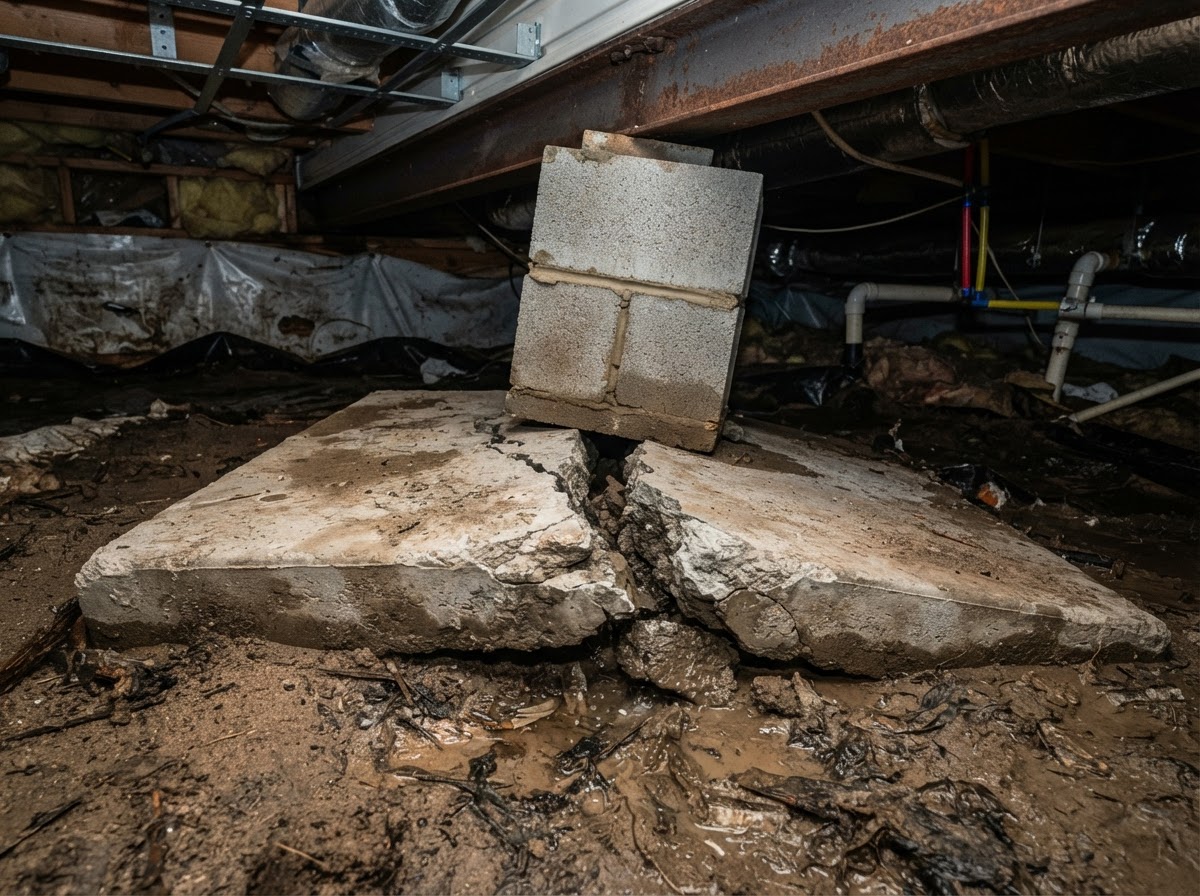
The concrete pad or footing beneath a manufactured-home pier is the bearing surface that carries the vertical load above it. When a pad cracks, breaks, settles, or becomes displaced, the pier resting on it can lose proper support, tilt, or drop with it — and the floor above can change elevation as the base moves. A damaged pad is a bearing-surface problem, which is different from a damaged pier above it: the pad is what the pier sits on, so a pad failure can cause the pier above it to fail even when the pier itself is intact. Homeowners in Millsboro and throughout Sussex County, DE usually notice this as a visible crack through the pad, a broken pad section, a pier that appears tilted because its base has become uneven, a pad that has settled lower, or a floor that has changed elevation above the same support. Millsboro Mobile Home Leveling evaluates the pad, the pier it supports, the shims and frame contact above it, and the surrounding bearing condition to identify what appears to be happening and what type of repair may be appropriate. Not every hairline crack in a concrete pad means the pad has failed — the condition has to be read in context with the movement and the support above it.
Request Mobile Home Foundation Service
Serving Millsboro and all surrounding Sussex County communities.
Cracked Mobile Home Foundation Pads Near Millsboro
A cracked concrete pad may be cosmetic, minor, or structurally meaningful depending on the crack pattern, whether there is visible movement or settlement, the pier position, and the bearing condition above and below it. The same crack can mean very different things on two different supports, which is why the pad is read together with the pier it supports.
Hairline / Minor Surface Cracking
Not every small crack means a pad has failed. Shrinkage or surface cracking without movement, settlement, or a change in the pier above it may be cosmetic rather than a bearing problem.
Cracks With Visible Movement
A crack with displacement — where one side sits higher than the other, or the two sides have shifted — changes the bearing surface and can tilt the pier above it.
Broken Pad Sections
When a pad breaks into separate pieces, the continuous bearing surface is lost and the pier above may rest on one piece while the other moves.
Settled Pad
A pad that has sunk into its bearing material drops the pier above it by the same amount, which shows up as a slope in the floor above.
Pier No Longer Centered
When a pad settles or shifts, the pier above it can end up off-center, concentrating the load on one edge of the bearing surface.
Repeated Support Movement Above the Pad
When the same pier keeps needing re-leveling, the pad beneath it may be the cause. Recurring movement above a pad is a reason to evaluate the bearing surface below it.
A crack in a foundation pad is read in context — with the movement, the pier position, and the bearing condition — rather than on its own. A hairline crack without movement is not the same as a broken pad that has settled beneath a pier.
What Can Cause a Mobile Home Foundation Pad to Crack or Move
Pad damage usually starts beneath the pad or around it rather than in the concrete alone. The conditions below describe the causes most often found under a damaged bearing surface, but each one has to be inspected rather than assumed.
Settlement Below the Pad
When the bearing material beneath a pad settles unevenly, the pad above can crack or tilt as its base changes.
Uneven Bearing
A pad set on an uneven base carries its load on one side more than the other, which can crack the concrete over time.
Erosion or Washout
Water directed beneath the home can erode the bearing material under a pad, removing support from below and letting the pad settle or break.
Prior Repair / Installation Problems
A pad placed on loose or uncompacted material, or set off-level during earlier work, can fail as the home continues to load it.
Pier Movement Above the Pad
When the pier above a pad shifts or leans, it can concentrate the load on one edge of the bearing surface and crack the pad beneath it.
Age / Deterioration
Older concrete can deteriorate over time, especially where it has been exposed to moisture, which can reduce the bearing capacity of a pad.
Broader Foundation Movement
A cracked pad can be one sign of a wider settlement pattern rather than an isolated bearing problem.
Local Load Concentration
When the load above a pad is concentrated off-center, the edge of the pad can crack or break under the uneven stress.
How a Cracked Mobile Home Foundation Pad Is Evaluated
The evaluation reads the visible crack, break, settlement, or displacement first, then the pier the pad supports, and finally the shims, frame contact, and nearby supports to determine whether the pad damage is isolated or part of a broader settlement — and whether the repair means the pad, the pier, the leveling, the reblocking, or a broader stabilization.
- 1
Inspect the visible crack, break, settlement, or displacement
Read the crack pattern and whether the pad has moved, settled, or broken into pieces.
- 2
Evaluate the pier supported by the pad
Check whether the pier above the pad has tilted, settled, or shifted because the bearing surface beneath it has changed.
- 3
Check shims, frame contact, and nearby support elevations
Read how the frame sits above the pad and how the adjacent supports compare.
- 4
Determine whether the pad damage is isolated or broad
Decide whether one pad has failed or whether the damage is part of a wider settlement pattern.
- 5
Identify the appropriate repair
Determine whether the condition requires pad correction, pier repair, re-leveling, reblocking, or stabilization.
- 6
Recheck the support relationship after correction
After the agreed work, recheck the pad, pier, and frame contact to confirm the correction held.
Homeowners should not replace a concrete footing or pour a new pad beneath a pier themselves. Pad repair is matched to the bearing condition beneath it — pad correction, pier repair, re-leveling, reblocking, or stabilization — rather than simply patching the crack on top.
Mobile Home Foundation Pad Problems in Millsboro & Sussex County
Foundation pad repair is provided for homeowners in Millsboro and across Sussex County, DE, including Long Neck, Dagsboro, Georgetown, Frankford, and Harbeson. The repair depends on the crack condition, the movement, the pad elevation, the pier position, the home type, the condition of nearby supports, prior repair history, and how accessible the area beneath the home is. No unsupported claim is made about a specific local concrete failure rate or a universal regional soil condition, and no assumption is made about any property based only on its city. The bearing and crack conditions beneath any given pad are property-specific and have to be inspected.
Related Services
- Mobile Home Foundation & Leveling InspectionThe evaluation that reads the pad and pier before recommending repair.
- Mobile Home Concrete Footing & Pad RepairThe core pad and footing repair service.
- Mobile Home Pier Repair & ReplacementWhen the pier above the damaged pad also needs work.
- Mobile Home Foundation RepairThe broader foundation repair service.
Cracked Mobile Home Foundation Pad FAQs
Does every crack in a mobile home foundation pad require repair?
No. A hairline or surface crack without movement, settlement, or a change in the pier above it may be cosmetic. A crack with displacement, a broken pad section, or a pad that has settled beneath a pier is more likely to need repair. The crack is read in context with the movement and the support above it.
Can a broken pad cause a pier to sink?
Yes. When a pad breaks or settles, the pier resting on it can drop or tilt with it, which is why a low or leaning pier often points at a bearing problem beneath it.
Can a cracked pad make the home unlevel?
Yes, conditionally. A cracked pad that has settled or broken can let the pier above it drop, which changes the floor elevation above that support. A hairline crack without movement may not affect the level at all.
What is the difference between a damaged pier and a damaged pad?
The pad is the concrete bearing surface beneath the pier; the pier is the support column that sits on the pad. A damaged pad can cause the pier above it to fail even when the pier itself is intact, so the two are evaluated together but repaired as separate components.
Can a pad settle without visibly cracking?
Yes. A pad can sink into soft or disturbed bearing material without an obvious crack on top, which is why the pier elevation above a pad is read along with the pad itself.
Should a leaning pier's pad be inspected?
Yes. A pier often leans because the pad or footing beneath it has settled or shifted unevenly, so the bearing surface is inspected along with the pier above it.
Can foundation-pad problems cause repeated leveling issues?
Yes. When the same support keeps needing re-leveling, the pad beneath it may be the cause. Recurring movement above a pad is a reason to evaluate the bearing surface below it.
Can a cracked pad be part of a broader settlement problem?
Yes. A single cracked pad can be one sign of a wider settlement pattern, which is why the evaluation checks the nearby supports rather than the damaged pad alone.
Do you repair damaged mobile home foundation pads near Millsboro?
Yes. Millsboro Mobile Home Leveling repairs cracked and broken foundation pads for homeowners in Millsboro and across Sussex County, DE, including Long Neck, Dagsboro, Georgetown, Frankford, and Harbeson. Call 302-449-7221 to schedule.
Schedule Mobile Home Foundation Pad Repair Near Millsboro
If a concrete pad or footing beneath your manufactured home has cracked, broken, or settled, contact Millsboro Mobile Home Leveling at 302-449-7221 to schedule a pad and foundation evaluation in Millsboro or the surrounding Sussex County area.
Request Mobile Home Foundation Service
Serving Millsboro and all surrounding Sussex County communities.